Friday, June 22, 2012

Sonic the Hedgehog Classic Series Reviews: Part 2

Well, everyone, it's finally June 23rd: Sonic's actual birthday. So, how about I finish what I started last week by reviewing what may very well be the two greatest Sonic games of all time while Sonic has his first really legal keg party. Let the continuation of the reviewing extravaganza begin.


---------------------------

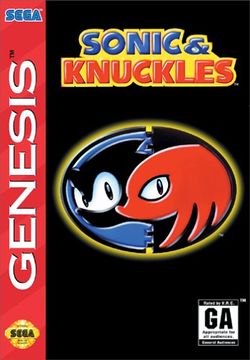
Sonic the Hedgehog 3 & Knuckles

Let’s move on to Sonic 3 & Knuckles. Actually, as you may have noticed, this is not one game, but two. See, Sonic 3 & Knuckles was originally going to be released as a single game, titled simply “Sonic the Hedgehog 3”. However, the game grew so large that it had to be split into two games, thanks to the cost of manufacturing such a massive cartridge as well as time constraints. To make up for this, Sonic & Knuckles was made into a special cartridge that allowed for “lock-on technology”; basically, you could stick another Sonic game’s cartridge on top of it and see what happens. For Sonic 1, you would be able to play the Special Stage of S3&K over and over again. For Sonic 2, you would get to play through the entire game as Knuckles the Echidna, the games’ featured new character. Finally, for Sonic 3, you would get to play the game as it was originally meant to be experienced: as a single, gigantic adventure. The game flows better this way and both games are basically the same in terms of gameplay. Not to mention that, should you get downloadable versions of the two games, you will still be able to play it – or, at least, I think you will, and most game anthologies that feature the classics allow for this feature as well. Of course, both games are good enough on their own, so if, for whatever reason, you can’t play the full version of the game, that’s fine too. Well, I suppose we should move on now.

The story of Sonic 3 & Knuckles is a bit more important than it was in its older brothers. There’s no dialogue or anything like that, but you will see a simplistic, but nonetheless actually kind of compelling storyline play out as you go through the game. As you should have already been able to tell, this game marks the introduction of Knuckles to the franchise. He’s a red echidna that is rougher than the rest of them and unlike Sonic, he doesn’t chuckle.
It legitimately bothers me that someone approved of these lyrics.

Now, at the beginning, you may not be quite sure what’s going on, since who reads instruction manuals anymore? See, Knuckles – the last of his kind - lives on Angel Island, an island that literally floats in the sky. The only thing that keeps it afloat is the Master Emerald, a very powerful gem with heavy connections to the Chaos Emeralds – which this island also has its own set of, apparently - that Knuckles must guard with his life in order to prevent it from falling into the hands of evil. Well, after the events of Sonic 2, Dr. Eggman’s – yeah, I’m done - beautiful Death Egg has come crashing down, and where else would it land but Angel Island. This, of course, brings said mad doctor to the place, and also brings along Sonic and Tails. Before the two make it there, Dr. Eggman convinces Knuckles that they intend to steal the Chaos Emeralds. Being ever-so-gullible, Knuckles confronts the two as soon as they enter the island and steals the Chaos Emeralds that they had already acquired in Sonic 2, drifts out of character by chuckling and runs off, and thus the two have to deal with Knuckles constantly along the way. Fortunately, he only proves a minor hindrance and the two confront the mad doctor just as he is about to re-launch his Death Egg. Eggman’s plans successfully thwarted, they…fall crashing down to the surface. Eggman isn’t about to give up, though; now aware of the Master Emerald’s existence, he intends to use its power to once again send the Death Egg into space, and it all builds up to an intense and legitimately exciting climax at the end. It really is kind of interesting to watch it play out, especially at the end, and I have to say, it’s a pretty impressive feat that the developers were able to tell this story very well without using any dialogue.


Visually, Sonic 3 & Knuckles is even more impressive than Sonic 2. By Genesis standards, this game looks simply incredible, and the detail given to the environments is kind of surprising. The soundtrack isn’t quite as good as that of Sonic 2 and has a few miss tracks – I’m not much of a fan of Marble Garden Zone or Carnival Night Zone myself – but is still pretty awesome and sounds like it’s going for a different style than that of the previous two games. Actually, I have to say, the Eggman boss theme of this game is probably my favorite out of all of the 2-D games, and the final boss theme just feels epic. I remember that, as a kid, I would use the cheat to unlock the sound test just to listen to it. It’s that good. As far as Zones go, it’s worth mentioning that different tracks were composed for both Acts of each Zone this time around. I’d say the best tracks are the ones for Hydrocity Zone Act 2, both Ice Cap Zone Acts, Flying Battery Zone Act 2, Lava Reef Zone Act 1, Sky Sanctuary Zone and both Death Egg Zone Acts.


Moving on now, Sonic 3 & Knuckles retains the two-Act structure that Sonic 2 introduced, and there are twelve – well, technically fourteen – Zones in the entire game. The difference here is that bosses are not only encountered in Act 2. Though Act 2 is where you’ll face Dr. Eggman, you’ll always have to face off with one of his many creations in Act 1. And I have to say, the boss design of this game is…actually quite good. I would say that it has probably the best bosses out of all of the 2-D games. A lot of them are very creative and some of them can actually be quite challenging, at least as you keep going on in the game.

So Sonic 2 improved upon Sonic 1’s core concepts and design in several ways. Naturally, one would think that Sonic 3 & Knuckles should continue to do so. Sonic 3 & Knuckles does this and more. First of all, let’s talk about our three playable characters. Yes, Sonic 3 & Knuckles is the first main Sonic game to introduce playable characters with legitimate differences from each other. Though you could play as Tails in Sonic 2, he was basically a second skin for Sonic. In Sonic 3 & Knuckles, he’s a bit slower than Sonic, but in return you are allowed the ability to use his two tails to fly, or, when underwater, swim. This is very helpful for getting around as well as finding secrets and different paths through levels. Sonic himself is even faster than he was in Sonic 2 and now has an Insta-Shield move, which very briefly creates a shield around Sonic when you press the jump button in midair. It requires exceptional timing to use effectively and may take some practice, but once you get skilled with it, it becomes very useful for taking out enemies and bosses quickly. And then we have the new guy, Knuckles the Echidna. While he has the lowest jump of all of the characters, in return he has a variety of abilities at his disposal. He can glide great distances and even hook onto and climb up walls with his…spiked knuckles. And, being a powerhouse, he can break through walls that Sonic and Tails can’t even hope to pass by with his face. Amazing.

I don’t think I can quite say the levels are specialized for each character, as they might be in the 3-D games; the general layout of each Zone is the same no matter who you’re playing as, aside from perhaps a few subtle differences here and there. However, the level design does offer plenty of opportunities to use Tails’ or Knuckles’ abilities to reach secrets or take paths and shortcuts that Sonic can’t. In fact, Knuckles’ limitation of having a low jump will require you to take completely different routes than Sonic or Tails in several places that will completely change your experience. These areas are actually optimized for Knuckles’ unique attributes; one segment in Ice Cap, for instance, requires you to use Knuckles’ abilities to glide and climb to maneuver around spiked ice balls, lest you experience great pain.

And on the subject of level design, that has improved significantly, and I already thought that Sonic 2 had some really fantastic level designs. Really, I’d hate to sound redundant, but the size of these levels is quite frankly amazing. Sonic 1 and 2 already had pretty huge stages, but the ones here are simply gargantuan. The amount of exploration this game offers is simply ridiculous and the stages are actually a lot longer than those of the first two games. Most of the levels in the first two only took two or three minutes to complete at the longest. In S3&K, even if you don’t dawdle and are playing well, some of them can last up to five minutes. At the same time, levels never at any point feel like they’re dragging on or getting old. The Zones of this game are probably some of the most diverse, creatively designed and fun that you will find in the entire franchise; each Zone has its own very unique attributes and gimmicks and expertly crafted platforming. Of course, the speed is still very much here. It’s just as satisfying and balanced out just as well with the platforming as in Sonic 2. In fact, the game proves to be even faster than Sonic 2. Honestly, I am legitimately amazed that they were able to make a game like  this on the Genesis way back in 1994.

Of course, even the levels of Sonic 2 weren’t perfect. Many of Sonic 2’s levels had some pretty bad enemy placement that slightly cheapened what were otherwise very fun Zones. Fortunately, Sonic 3 & Knuckles successfully averts this flaw. In fact, I can’t really think of any significant problems I had with the levels of this game. I remembered disliking Sandopolis Zone, but playing through the game again, I even enjoyed it. I suppose the one element I will have to admit is badly designed is the infamous barrel in Carnival Night Zone Act 2. See, there’s this one segment of that stage where you’re locked in a room with no apparent means of escape. On the room’s other side, there is a multicolored, spinning barrel that moves up and down when you get on top of it. However, said barrel hates you and won’t let you down to the room below easily. How do you get past this obstacle? Well, you press up and down on the D-Pad, corresponding with the motion of the barrel, until you can get out. Unfortunately, this isn’t explained in-game at all and, as such, this segment has confused many a player. Once you figure out what you’re supposed to do, it isn’t hard, but I do have to admit that it’s a bit of a flaw.
Pictured above: The bane of many a Sonic fan's existence.

Back on the subject of exploration…eh…sort of, the game encourages it somewhat more than previous games by actually hiding the entrances to the Special Stages within the levels themselves. So, now, let’s talk about those. In S3&K’s Special Stages, you are dropped into a 3-D plane and must collect all of the Blue Spheres in the stage while avoiding the red ones. Collect all of them and you will receive the obvious prize: a Chaos Emerald. Things start out pretty slow, but the longer you take, the more things speed up, which, combined with the bumpers everywhere, makes for a much greater risk that you could touch a red sphere. These Special Stages are easily my favorite in the entire series, and if SEGA is so intent on reimagining old Special Stages for the Sonic 4 games, I hope to see these reimagined for Episode 3. Well, provided they make an Episode 3, anyway.

As for the reward for getting all of the Chaos Emeralds, well, just like in Sonic 2, you will be able to play as Super Sonic. Or, if you’re playing as Knuckles, Super Knuckles, who is exactly like Super Sonic except…it’s Knuckles. Of course, this game doesn’t just give you seven Emeralds to collect. If you collect all of the Chaos Emeralds in the Sonic 3 half of the game and enter a Special Stage, you will have the opportunity to play seven more Special Stages for “Super Emeralds”. And if you collect all of those, you get even better super forms. Super Sonic becomes the seizure-inducing Hyper Sonic, who is even faster than Super Sonic and can do a boost dash that kills all on-screen enemies. Super Knuckles becomes Hyper Knuckles, who is also a bit faster and can kill all on-screen enemies by gliding onto a wall with enough force. It’s also by collecting all of the Super Emeralds that you can unlock Tails’ super form, Super Tails. While you do have to put more work towards getting it, Tails’ super form is probably the most broken in the game. He is surrounded by four birds of death that attack all on-screen enemies. Heck, you can just sit still during boss fights and let them do the work for you. Once again, all these super forms are really freaking cool. They’re completely broken, but that’s what makes them fun to use. However, it is worth noting that getting to and completing the Special Stages in this game is much easier than it was in Sonic 2, and these super forms will basically trivialize the entire game. Thus, it’s recommended that you play through the game at least once without them.

Oh, but that’s not the only reward you get for collecting all of the Emeralds in the game. While it will also get you a better ending, as always, if you’re playing as Sonic, you will also get to play an extra level called The Doomsday Zone as Super or Hyper Sonic containing a true final boss. Yes, Sonic 3 & Knuckles is actually the game that started that trend in Sonic games, and I have to say, I approve, both of the idea and of the boss itself and it also further adds to what was already a pretty thrilling climax.

Really, the only thing I have to complain about aside from the barrel is that this game is still, unfortunately, a bit unpolished. Glitches aren’t as frequent as in Sonic 2, and are, in fact, pretty freaking rare, but when they do hit, they hit a bit harder. For instance, there’s a certain wall in Launch Base Zone that I ended up getting stuck in a few times with no way of getting out and there was also one time in Hydrocity Zone Act 2 where the camera actually locked in place for some reason, preventing me from progressing. I’d really hate to knock this game’s grade down, but unfortunately, this did prove to be a significant enough issue.

Even with that said, Sonic 3 & Knuckles is by any standards a simply superb game. I’d say that it’s the game that Sonic 1 and 2 were building up to; the culmination of everything that would make the classics such great, influential games. However, it’s not quite the last stop on our journey; there was one more game released during this time that, though highly acclaimed, never quite received the recognition of the Genesis games due to the add-on required to play it. This is it, folks. Following this breakdown of S3&K’s positive and negative points, we shall be entering the realm of Sonic CD.

The Good:

+ Surprisingly good story
+ Fantastic visuals
+ Great soundtrack
+ Three different playable characters
+ Superb level design
+ Great bosses
+ Great Special Stage
+ Super forms are cool
+ Awesome secret final level

The Bad:

- The barrel
- Still a bit unpolished

Grade: A


Sonic CD

And so we have reached the final stop on our journey. Behold Sonic CD, one of the few really notable games for the SEGA CD. See, the SEGA CD was an add-on for the SEGA Genesis that played games on CD-ROM’s and used the advantages that came with said CD-ROM’s. Unfortunately, it was a massive flop, but it did get a very notable Sonic game on it. Sonic CD actually came out in 1993, a year before Sonic 3 & Knuckles. However, Sonic CD is a very different beast from the numbered Genesis games in many ways, so, for pacing reasons, I decided to review Sonic 3 & Knuckles first. Sonic CD is actually one of the more unique Sonic games in general…


...Well, one of the GOOD more unique Sonic games. In fact, Sonic CD is considered by some to be the absolute best game in the series…and is also considered by some to be a terribly designed train wreck. I can tell you right now that I most certainly do not fall into the latter category, and about the former…well, I’m not entirely sure. But before we get into why, let’s talk story.

Sonic CD’s plot is about as important to it as it is to Sonic 1 and 2. That is to say, not at all. However, like Sonic 2 and 3, it does introduce a new character – actually, two. First, there’s Amy Rose, Sonic’s pink-haired fangirl who is obsessively fascinated with him and is determined to follow him wherever he goes. Amy would end up becoming a more prominent character starting with Sonic Adventure, but as of now, she’s just a damsel in distress. Shortly into the game, she gets captured by Sonic’s new rival, built by Dr. Eggman himself: a robotic twin known simply as “Metal Sonic”. Metal Sonic wouldn’t appear much in the series outside of cameo appearances and extras, but when he did make legitimate appearances, he’d generally have a pretty big role. He was actually the final boss of Sonic Heroes and was a very prominent character in the 1996 Sonic OVA, better known in America as Sonic the Hedgehog: The Movie. Oh, and he’s freaking awesome.

Sonic CD also takes place in a different location than the other classics; this would be Little Planet – very creative name indeed – which passes by Mobius every year. It just so happens that it has seven Time Stones on it, and whosoever gains those gets a lot of power or something like that. So, Eggman chains Little Planet to a mountain and begins ruining everything. Naturally, Sonic has to stop him. We kind of see this scenario play out in the game’s intro movie, set to a vocal song called “Sonic Boom” – one of the first of many that we would see in the franchise. See, one of the most widely-used advantages of CD-ROM technology at the time was its ability to play FMV’s. Sonic CD has three of them: the intro and a good and bad ending. They don’t look quite so good on the SEGA CD and PC versions, but they are remastered on the Gems Collection version and probably the XBLA version and are quite nice to watch. Oh, and I don’t care what anyone else says: Sonic Boom is an awesome song – both versions of it.
Trouble keeps you running faster...

Which brings me to the soundtrack – or, well, the two different soundtracks. Sonic CD is rather infamous for the fact that the soundtrack was completely changed, aside from some tracks, when it came over to the U.S. This was changed to this, this was changed to this, this was changed to this, this was changed to this, etc. Basically, the more quirky J-Pop-esque soundtrack was replaced with much more U.S.-friendly electronic rock, and Americans wouldn’t be able to play the game with its original soundtrack until last year’s XBLA port. Honestly, though? A few tracks aside, I much prefer the U.S. version. Maybe it’s just because it’s what I’m used to, but I feel like it suits the game a lot more, it sounds awesome and, although it isn’t as quirky, it still has its own unique feel and style to it. Really, most of the Japanese soundtrack doesn’t appeal to me. I have no inherent problem with quirky soundtracks – in fact, I love Sonic Rush’s soundtrack – but some of Sonic CD’s original tracks are just…far too weird for me, and a lot of the others, I just don't like quite as much. Oh, and really, there’s a fine line between “fun” cheesy - like Sonic Boom - and “I’d be horribly embarrassed to be caught listening to this” cheesy.

The chorus says "Toot Toot Sonic Warrior". You have been warned.


Sound design aside from the soundtrack, I can’t say fares very well, at least in the Gems Collection version, which this review is based off of. In fact, the Gems Collection version is a port of the PC version, which had the same issues, as I recall. I can’t comment on the XBLA port or the original SEGA CD version, but all of the sound effects, from jumping to getting Rings to bouncing off of enemies, sound like they’re being put through some sort of filter. It’s far from a big issue and you will get used to it, but it really shouldn’t be there. Visually, though, this game is simply gorgeous. The developers utilized the new CD-ROM technology – or, at least, I assume that’s what allowed them to do it - to create environments far more colorful and surreal than might have been seen in an average Genesis game. Seriously, these Zones look like something out of an acid trip, and there’s always so much going on. It’s really beautiful, and, like Sonic 2 and 3, the visual appeal is still there to this very day.

So now let’s move on to how the game plays. In terms of base mechanics and physics, the gameplay is similar to that of the other classics. Sonic runs really fast, momentum, inertia, bouncing, springs, Rings, etcetera, etcetera. However, there are some very significant things, even outside of the aesthetic design, that make this game really unique and separate it from Sonic 1-3&K. First of all, let’s talk about the game’s big gimmick: time travel. This is where you can really tell that the developers really wanted to go crazy with the CD-ROM technology. See, in every level, there are a number of signs with “Future” and “Past” written on them. If you touch one and then maintain speed for a long enough time, you will travel to said time period. This completely changes the stage’s aesthetics; music and visuals will both be completely different depending on the time period. Actually, there are two potential futures: a grim and dark bad future, in which Dr. Eggman has taken over and ruined everything, and a bright and happy good future, where we see nature and technology working together peacefully. We’ll discuss how to change the future in a bit. While completely changing the aesthetics would have been impressive enough in 1993, that’s not all that changes when you travel through time. The layout of each stage will be significantly different. Some new areas will open and some others will be closed off, and there may be some new items to get and some that aren’t there anymore. Even the platforming of a stage and the challenges that it poses to you can completely change depending on the time period.
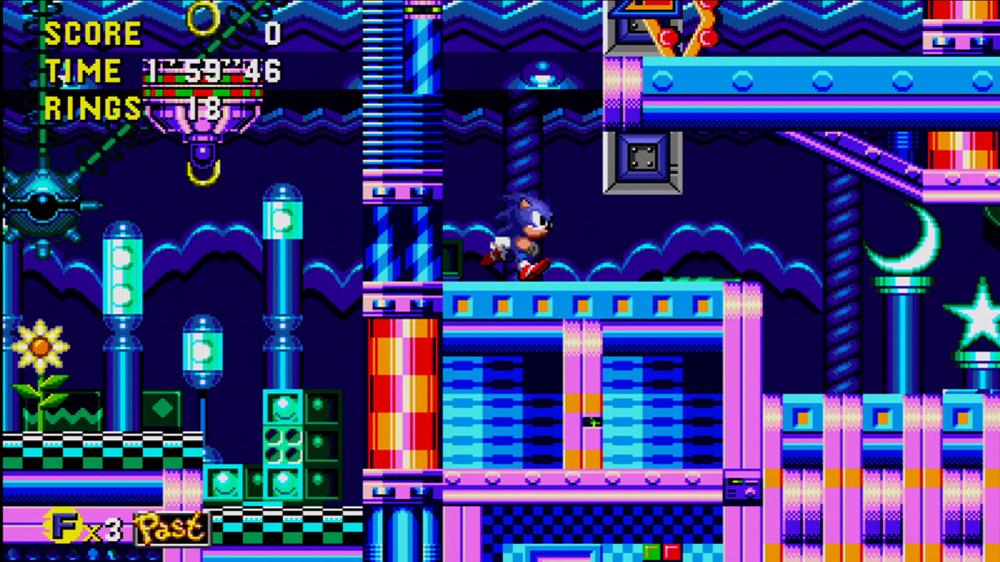

This, of course, leads to the style of stage design being very different from what we saw in the other classic games. The speed and platforming are both as abundant and as fun as ever, and the platforming is still very interesting and creative. Stages in general have a great deal of very original and interesting challenges and gimmicks; Stardust Speedway, in particular, has panels that, when jumped into, will change whether Sonic is taking a path in the foreground or background and Wacky Workbench has a glowing floor that, when touched, sends you to ludicrous heights as well as wired mechanisms throughout the stage that electrify at regular intervals. However, what makes Sonic CD’s level design so much different is just how ridiculously complex and labyrinthine it is. Sonic 1-3&K had some very large levels that offered a lot of potential for exploration, but many of Sonic CD’s stages are downright convoluted. Some actually don’t like the game for this, but you know what? I think this really works. In, say, S3&K, I do like to experiment, but in general, I adhere to whichever paths I end up on. In Sonic CD, I find myself backtracking and messing around a lot just to see what sorts of secrets or platforming joys await me around every corner, and the time travel mechanic, due to changing the layout of the stage, only adds to this. 

Actually, Sonic CD encourages and at times even requires exploration more than the other classic games did. The way the time travel mechanic changes the layouts may cause you to need to experiment more to find your way through the stage, and there is also a robot generator hidden in each level. Destroying it will cause you to get a good future for that stage. Alternately, you could simply get all of the Time Stones from the Special Stages, which allows you to have a Good Future in every Zone following your acquisition of them and, consequently, you will get to see the game’s good ending. Accessing Special Stages is done like it was in Sonic 1: you hold onto 50 Rings until the end of the stage and then jump into the giant ring. In Sonic CD, if you’re unlucky enough to lose your Rings at any point or don’t have enough at the end, it is possible to backtrack through and explore the stage to find any Rings you might have missed. Of course, this is not to say that I think that the level design style of such games as Sonic 2 and 3&K are necessarily worse than that of Sonic CD; in fact, I think that style works better for Sonic and I do find that 3&K’s level design is generally a bit more interesting. However, as a one-time deal, I feel like the level designs come together with the time travel mechanic to create a really fantastic and unique experience.

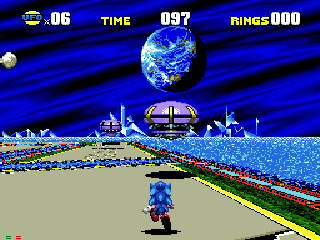
So, I suppose that I should talk about the Special Stage now. This is another aspect of the game that tends to get flack, but honestly, I think the Special Stage is…okay. Basically, it has a 3-D behind-the-back perspective, similar to the Sonic 3 & Knuckles Special Stage. However, instead of collecting Blue Spheres, you’re destroying a certain number of purple UFO’s, scattered across the Special Stage’s map. To help you or potentially hurt you are fans that cause Sonic to float for a while and springs that send you high into the air. There are also choppers that take away some Rings and slow you down, walls that you bounce off of and pools of water that take away a chunk of your time whenever you step in them. Oh, yeah, time is ticking down the whole time, by the way. Fortunately, though, whenever your allotted time dips below twenty seconds, a blue UFO appears. Destroy it, and you will gain thirty seconds back. The last couple of Special Stages can be a bit tedious, but really, it’s not bad; I’d rather play it than the Sonic 1 Special Stages any day, at least.
As for flaws, aside from the minor sound effect problem, bosses in this game are just too easy. Yes, I’ve already made it clear that, S3&K aside, Sonic bosses were always easy, and some CD’s bosses are a bit creative. However, even by Sonic standards, the difficulty is a bit ridiculous; the boss of Quartz Quadrant actually kind of kills itself, and the final boss is completely anticlimactic, literally only taking four hits to defeat. The only boss that’s even remotely challenging is the race against Metal Sonic in Stardust Speedway, which is completely awesome. And *sigh*, just like Sonic 2 and 3&K, it’s a wee bit unpolished. There are some weird physics oddities that happen occasionally and also some strange collision detection issues. While these issues are certainly nothing big, they, once again, really shouldn’t be there. Though I’ve never played it myself, the XBLA version supposedly fixes these issues. Also, you can play as Tails in it and you’re given the choice of which soundtrack you want to hear when you play the game. If you don’t already own this game, it’s probably the version to get.

The Good:

+ FMV’s are nice
+ Great soundtrack (I prefer U.S.)
+ Beautiful visuals
+ Time travel mechanic is unique and adds much depth
+ Fantastic, creative level design that compliments gimmick

The Bad:

- Oddly low-quality sound effects
- Very easy bosses
- Still slightly unpolished

Grade: A
------------------------------

Well, this is finally the end of our little excursion through the four original Sonic the Hedgehog games. These games would highly influence many platformers that would come afterwards and, in fact, could be considered to have defined an entire generation of gaming. Really, it’s not hard to see why, as all of these games have held up very well and have been surpassed by very few recent platformers, in the Sonic series or otherwise. I’d actually put Sonic 3 & Knuckles and Sonic CD up there with modern greats like Donkey Kong Country Returns and Rayman Origins as some of the very best games the 2-D platforming genre has to offer. Heck, the only recent Sonic game I would really argue to surpass any of them (except for maybe Sonic 1) is Sonic Generations. The classics are absolutely excellent games and, if you haven’t played them yet, you really should. They have all been ported and rereleased a great number of times, and, in fact, you will find literally all of them on the Xbox Live Arcade and PSN. Happy 21st birthday, Sonic. Enjoy that beer. You’ve earned it.

Just try not to puke all over the floor.

Sunday, June 17, 2012

Sonic the Hedgehog Classic Series Reviews: Part 1


Well, it’s that time of year again: time to celebrate Sonic’s 21st birthday. Yes, my last post was a review of Sonic 4: Episode 2, but, as these are the only main Sonic games I have yet to review, it needed to be done and there was no better time than now. Not to mention that it’s basically a rule that I must have an unhealthy number of Sonic-related posts each year. You may notice that this post is labeled "Part 1". As I wrote this, I realized that to place my reviews for all four games in a single post would make this ridiculously long; thus, I'm going to put out the Sonic 1 and 2 reviews right now and post up the reviews of Sonic 3 & Knuckles and CD on June 23rd, Sonic's actual birthday. But before we get into the reviews, let’s go back in time to an era before green eyes and physics, before Ryan Drummond and Jason Griffith, before Werehogs and boosting to win, so that we can enjoy a little history lesson.

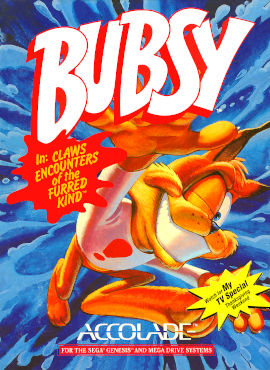
A long time ago in a decade far, far away, a video game company called SEGA forayed into the home console business that Nintendo's Famicom/NES revitalized. Their console was called the SEGA Master System in the American and European markets, and while it was technically superior to Nintendo's console and had its more popular games, such as Phantasy Star and the Alex Kidd series, it failed to achieve the NES' popularity by a long shot, at least outside of Europe. Down but not out, SEGA released a successor to the Master System in 1989 (1988 in Japan). It was called the Genesis (or Mega Drive, if you live in Japan or Europe) and its 16-bit processing power made Nintendo's console look like crap by comparison. However, the new console didn't see much success until SEGA decided to create a mascot for it, and thus, Sonic the Hedgehog was born and would go on to spawn a massive number of games, four different cartoon series, an OVA (or movie, if you prefer), an ongoing Archie comics series and a number of "inspired" clones and imitators that tried to cash in on the whole "extreme wacky animal" thing, often with limited success...and game quality. Some were more blatant than others.

Top: Inoffensive "inspiration", although that may be the ugliest thing I've ever seen.
Bottom: Something someone should have gotten sued over.

Sonic was meant to compete with Nintendo’s ever-endearing plumber, Mario. The series did a pretty dang good job of that, as Sonic was the physical embodiment of 90’s TOTALLY RADICAL EXTREEEEEME. This kid wasn’t slow and fat like that lame-o plumber dude; this way past cool ‘hog had an attitude. He wasn’t taking any crap from Dr. Robotnik…or…Eggman…or…whatever you want to call him, and true to his name, he was freaking fast. The four – well, technically five – main games that came out during this era capitalized on this by providing innovative gameplay mechanics and level design. Even today, these games are considered by many to be some of the best that the series has to offer and even some of the greatest 2-D platformers of all time. So, I’m going to use this celebration as an opportunity to see exactly what made these games great while Sonic has his first legal keg party.


Well, I guess it technically isn't legal for about another week, but hey, I guess Sonic just doesn't care. Hooray.

---------------------------------

Sonic the Hedgehog


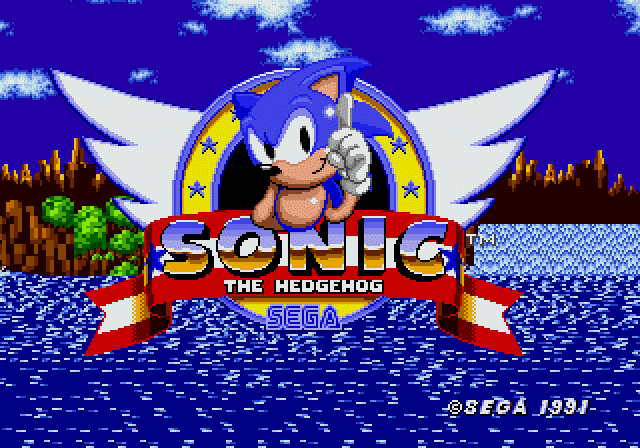
Well, let’s start with the original game, released in 1991. As one would expect, this game laid a lot of the groundwork that most future games in the franchise would follow. The plot of the game – well, what little plot it has - is that the nefarious Dr. Eggbotnik is capturing small animals and using them as organic batteries for his own robots, which he will use to take over the world. Enter Sonic, our cool blue dude with an attitude and the speedy shoes and the...okay, I’ll stop now. Anyway, Sonic doesn't like what he sees and decides that Dr. Robeggman must be stopped. Since it's an old Genesis platformer, you really can't expect much emphasis on plot. However, what is kind of interesting is that the game could be considered to have a subtle moral about environment conservation, which would actually carry over into the 1993 Saturday morning cartoon. At a time when shows and movies such as Captain Planet and FernGully: The Last Rainforest were relentlessly shoving this moral down our throats with all of the maturity, tactfulness, unpretentiousness and intelligence of a Cranberries song, it's nice to see that something tried to use a little bit of subtlety in conveying the message. Oh yeah, this was copied, too. Poorly.

Inject your trees with liberty!
I honestly wonder if this game could have lost a plagiarism lawsuit. Seriously, "Dr. MACHINO"?


Visually, Sonic 1 holds up…okay. Even when compared to later Sonic games on the Genesis, Sonic 1’s visuals don’t stand out quite as much, not being as bright, vibrant and colorful as what we would see later on. Green Hill Zone is the closest this game gets, but eh, none of it really looks bad, and I’d say a lot of the character and enemy sprites are very impressive given the game’s age. The soundtrack is also very good and memorable, with some highlights being Star Light Zone's and Scrap Brain Zone's tracks, although, again, it’s not quite as good as what would see – ehm – hear in later games.

Of course, if that were all that Sonic 1 had going for it, we wouldn't have much to talk about, would we? Before we talk about the main gimmick of the game, let's go over some basics. There are six Zones (worlds, basically) in the game with three Acts (levels) in each. The goal of each act is just to get to the end. However, Dr. Machino’s robots and numerous obstacles and traps will be standing in your way. One hit and you're dead - that is, if you don't have any Rings. Rings can kind of be thought of as life energy for Sonic, although they're not health in a conventional sense. There are plenty of Rings to get on any given path you can take in each level, and as long as Sonic is holding onto at least one, he can take a hit without dying. However, you will lose all Rings you have been holding onto if you get hit, in which case you need to get as many back as you can before they disappear. There is actually a shield power-up which creates a protective barrier around Sonic that will absorb one hit of damage. Other power-ups include the classic platformer staple of invincibility, which pretty much speaks for itself, and Power Sneakers, which briefly let Sonic run even faster than normal. At the end of the third Act of each Zone, you will fight against Dr. Wilybotnik in one of his many machines. Bosses in Sonic 1 are far from the most challenging you’ll ever face, but are nonetheless fun to tear apart.

Well, that’s the basic gist of things. Anyway, the most prominent gimmick of the Sonic series is that Sonic is the fastest thing alive. As such, you can probably expect a significant amount of speed in this game. This is at least partially thanks to the physics. As Sonic runs and especially when he rolls down slopes (done by pressing down on the D-Pad), he gains momentum and maintains inertia even when the player isn’t actively controlling him, and levels are very sloped and angled to make use of this. Not only does this allow for some cool tricks, but movement feels absolutely fantastic. The sense of speed is definitely there and results in some very satisfying moments. However, one thing that you will be using this for a lot is to make it to different areas in each level, which brings me to another way that Sonic 1 really innovated. Up to this point in time, most platformers had fairly straightforward level design. There may have been some secrets here and there, but they mostly kept you on a set path. Sonic 1, on the other hand, features gigantic and complex levels and a significant element of legitimate exploration. There are many different ways to go through each Act, and it adds a lot of replay value to try to take paths that you didn't take the last time through the game. At the time, I doubt the stages of this game could have been anything less than revolutionary, but even today, they just feel huge and are a joy to run through and explore.

Now, gaining speed is easy enough, but maintaining it is a whole other story. See, the classics were built upon the idea that speed is most satisfying when it’s a reward for skillful play. The game was obviously designed with this in mind; even getting hit by an obstacle or enemy will get you knocked back, completely destroying whatever momentum you already had, and this also comes into play in the level design. Good examples can be seen in areas of Marble Zone and Spring Yard Zone, which feature treacherous platforming segments that will require you to be very careful if you hope to maintain a sense of speed.

But while the speed was probably the most interesting aspect of Sonic 1 at the time, when compared to a lot of games in the series, it does prove to be a lot slower, not just in terms of Sonic’s top speed, but in terms of general design. While there are still several opportunities to go fast in the game, it tends to focus less on speed and more on straight-up platforming, at least more so than the series’ later games. In fact, one Zone – namely, Labyrinth Zone - doesn’t really offer any opportunities to go fast at all, at least not as far as I’m aware. Platforming also tends to be slower-paced than what you might expect from Sonic. Of course, I don’t think the game is bad for it. While platforming is a bit slower and more emphasized than you might expect from a Sonic game, in return the platforming is very complex and interesting and thus the level designs of Sonic 1 are a lot of fun in their own right.

But…that’s not to say that everything is perfect when it comes to the levels. Actually, there really aren’t any problems with the levels themselves; each Act in the is game very well-designed. However, the game just feels so…disorganized, so to speak. So, we start the game with Green Hill Zone, a simple and easy Zone that’s pretty fast and allows players to get acquainted with the game, like any good first stage should. Suddenly, we see a massive spike in difficulty in the much slower-paced and platform-heavy Marble Zone. Spring Yard Zone sees things getting a bit easier again and allows for more speed. Then, suddenly, we’re thrown into Labyrinth Zone, the second-most difficult Zone in the game, which is very slow due to a great chunk of it being submerged underwater and Sonic can’t swim. And expect to do a lot of waiting around for air bubbles so you don’t asphyxiate. And then there’s Star Light Zone, which is the fastest and possibly even the second-easiest Zone in the game. This very awkward pacing makes going from Zone to Zone pretty jarring and is going to be especially off-putting for new players; it may take a couple of playthroughs to completely get into all of the levels. Unfortunately, this is a pretty significant flaw.

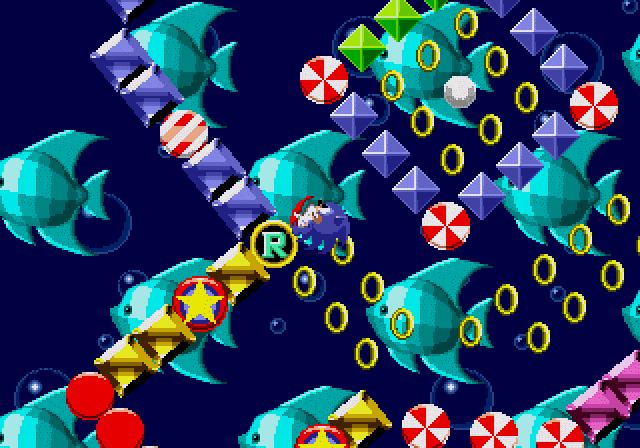
Also…I really don’t care for the Special Stages in this game. For those who aren’t in the know, Special Stages are a mainstay of the 2-D Sonic games. Completing them usually yields a Chaos Emerald, of which there are either six or seven, and getting all of the Chaos Emeralds will get you a better ending and sometimes even some other cool stuff, which will be touched on in later reviews. Special stages in Sonic 1 are accessed by completing a level with 50 Rings, and are rotating mazes filled with bumpers, blocks that reverse the stage’s rotation, blocks that speed up the stage’s rotation, blocks that slow down the stage’s rotation, and misleadingly named "GOAL" blocks that throw you out of the stage when you touch them. As mentioned before, there is a Chaos Emerald hidden in every stage, and you have to navigate Sonic - in ball form, meaning that you don't have full control over him - through the maze to the Chaos Emerald without touching any "GOAL" blocks. This is…just as frustrating as it sounds. All the bouncing around you do is bound to make you hit blocks that reverse or speed up the stage, complicating things or even sending you in circles, and bumpers will often send you careening into directions you don’t intend to go in. This makes navigating these monstrosities more of a pain than anything, not to mention that the reward for getting all of the Chaos Emeralds in this game is pretty lame anyway. Unless you think the ending needs more giant flowers or care that much about your score, there won’t be much incentive to bother.

But for all of these flaws, Sonic 1 is a great game, especially for its time. When it first came out in 1991, it was innovative in pretty much every sense of the word, and it's still a lot of fun to play today. It's not as great as Sonic games would get, but it's still a really good platformer that belongs in any gamer's collection.

The Good:

+ Innovative physics for its time
+ Good sense of speed
+ Great level design
+ Great replayability

The Bad:

- Flawed Zone pacing
- Special stage sucks
- Lackluster reward for getting all Chaos Emeralds

Grade: B+


Sonic the Hedgehog 2

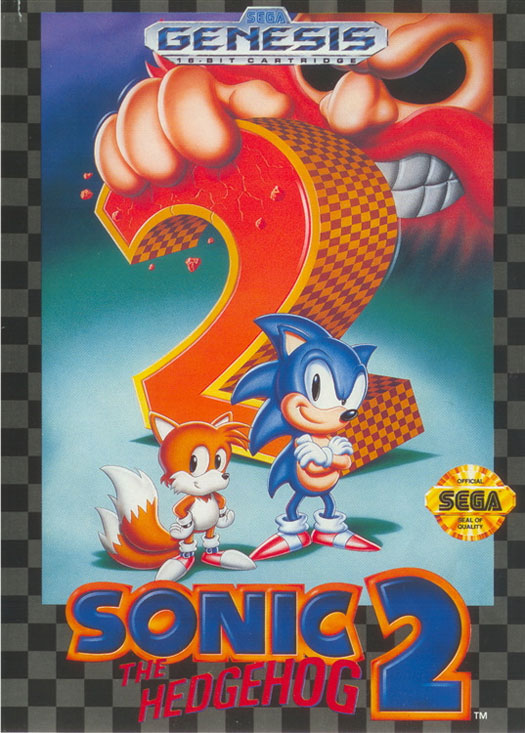
Well, with that out of the way, let’s move on to Sonic the Hedgehog 2. Sonic the Hedgehog 2 was released in 1992 and is still considered by some to be the very best game in the series. Personally, I’d disagree, but that’s not to say it isn’t really awesome. The plot of the game is exactly the same as that of the first game, except for the fact that Eggman now intends to build a giant space station called the Death Egg, which is totally not a reference to Star Wars. Also, Sonic is (optionally) accompanied by his fox sidekick, Tails. All you need to know about him is that he idolizes Sonic, he has been blessed with two tails that he can use to...fly - not that you can make use of it in this game - he’s a mechanical genius, and he is probably the only eight-year-old with a pilot’s license…or at least I…hope he has one.

Even if it weren't for the death robots, this would be a pretty dangerous situation.

On the aesthetic side of things, Sonic 2 is a sizeable improvement over its predecessor. All of the Zones look great given the game’s age, being very vibrant and colorful, and they are very visually appealing even today. The soundtrack is also probably one of the most iconic and memorable in the entire series. It’s actually a bit difficult to pick out which tracks are the best, because the entire soundtrack is absolutely fantastic. However, I suppose that if I had to pick three favorites, they would probably be Chemical Plant Zone, Metropolis Zone, and the notoriously Inspector Gadget-esque Mystic Cave Zone

Woo-hoo...

Moving on to gameplay, Sonic 2 maintains the same gameplay style of Sonic 1, though, with the exception of Metropolis Zone, it ditches the three-Act Zone structure. Zones now have only two Acts; however, in return, there are a lot more Zones: nine as opposed to the original’s six. Thus, you’re getting roughly the same amount of levels, but with more diversity, so I’d say the change is a positive one. And, of course, you must do battle with Dr. Clawbotnik at the end of each second Act. Ol’ Dr. Nut-Megg has gotten a bit more creative this time around with his machines, which makes bosses a bit more interesting, but they’re still not much of a challenge.

So, as a sequel, Sonic 2 should improve and expand upon the gameplay and design of the first Sonic the Hedgehog game. Does Sonic 2 successfully do this? The answer is a resounding “yes”, especially where design is concerned. Sonic 1 was a fairly slow game by Sonic standards and mostly emphasized platforming. Sonic 2, on the other hand, speeds things up considerably. Sonic runs much faster in this game than he did in Sonic 1, and there are a lot more opportunities to make use of this speed. Chemical Plant Zone, in particular, has several moments where it feels like a giant, speedy joyride. Even by Sonic standards today, the sense of speed this game offers is at times pretty incredible and makes for some really exhilarating moments. The physics are just as great as ever, and Sonic even gains a spindash move in this game, which allows you to curl up into a ball and charge up a speed boost, which just makes gameplay that much more versatile. Levels are even more gigantic than they were in Sonic 1 and usually tend to be a lot less enclosed, which gives you even more freedom. Heck, there are still some areas in this game that I’ve only recently discovered!

Of course, while the game is very fast, don’t think platforming is downplayed, either. In fact, Sonic 2 balances out and even blends both speed and platforming almost perfectly. The platforming on display here is very good and the game contains no shortage of cool and creative ideas. Casino Night Zone, in particular, has gimmicks and such that are based on a pinball machine, which give Sonic’s physics an entirely new use, and Hill Top Zone features areas where you must move fast to avoid being killed by rising lava or even a rising floor that threatens to crush you against the ceiling. Also, you’re still going to have to play skillfully if you hope to maintain speed, and the Zones will only get more platform-heavy and difficult as you keep going. Speaking of which, Sonic 2 doesn’t suffer from the flawed pacing that Sonic 1 had: going from Zone to Zone feels very natural and there is a legitimate sense of progression.

The Special Stage, accessed by jumping into a portal after hitting a checkpoint with at least 50 Rings in tow, is a lot better this time around, as well. The game switches to a behind-the-back view for it, and the goal is to collect a certain number of Rings in a half-pipe within a limited time while avoiding bombs, which, if hit, will take away ten Rings. I mentioned in my Sonic 4: Episode 2 review that these Special Stages have been copied by later games to the point that they’re getting a bit tiring, but really, that’s not the game’s fault. It is a really fun Special Stage that gets really challenging towards the end. The only problem is that you are only going to want to play as Sonic alone if you intend to collect all of them. Going into the Special Stages while accompanied by Tails will cause needless frustration due to the fact that he has his own Ring counter and he moves and jumps about half a second after you do. Needless to say, it’s annoying and complicates things more than it should.

Oh yeah, the reward for getting all of the Chaos Emeralds in this game is actually pretty worthwhile. Sonic 2 marks the introduction of Super Sonic, a super-powered version of Sonic that runs twice as fast and is completely invincible, and you unlock him by – you guessed it – collecting all of the Chaos Emeralds. Once you do that, simply get 50 Rings, jump and then boom, Super Sonic. You lose Rings gradually while in your super form, and if you run out, you'll revert back to your base form. Nonetheless, it’s still a bit of a game breaker, but after fighting your way through all of the Special Stages, it honestly feels rightfully earned, as does the best ending of the game. Yeah, seeing Super Sonic in the ending technically isn’t a big change, but when I first got that ending as a kid, it felt freaking satisfying and still does to this very day.
To anyone who ever wanted more DBZ in your Sonic, here you go. Now stop writing that crossover fanfiction.

Unfortunately, the game still isn’t quite perfect, even aside from the problem with the Special Stage. Some of the enemy placement in this game is…quite frankly, slightly cheap. The first half of the game isn’t too bad in this regard, aside from some points in Aquatic Ruin, but starting with Mystic Cave Zone, this can start to become a bit of an annoyance. This is all building up to the absolutely despicable Metropolis Zone, where at times it feels like the enemy placement was handled by monkeys. It’s really not a bad level, as the platforming and general layout are actually pretty great, but this flaw seriously hurts it. That’s actually not the only element of bad design in the game, I hate to say; Mystic Cave Zone Act 2 has a really obnoxious inescapable spike pit of death that has claimed many a player, and if you happen to be Super Sonic, expect to be there for a while before you finally croak and restart at a checkpoint. And while far from broken, Sonic 2 isn’t especially polished, either; there are some glitches and oddities here and there, some a bit more frustrating than others. One particularly annoying glitch happens with a certain pair of yellow bumpers in Metropolis; you can get stuck between them and the only hope for escape is for time to run out. Unfortunately, this also seems to be a bit more noticeable when you’re playing as Super Sonic. Heck, once I jumped after hitting a Goal Post and Sonic attempted to transform, which got me stuck and…then I had to reset. It only happened once, but it was nonetheless quite frustrating.

But even with those frustrations in mind, Sonic 2 is an absolute blast to play through. Like I said, I wouldn’t quite agree that it’s the best Sonic game or even the best of the classics, but I would probably put it pretty high up there. It’s a fantastic game that improves a lot upon its prequel, but as we will see, things would only get even better.

The Good:

+ Great visuals
+ Fantastic soundtrack
+ More Zone diversity
+ Very fast
+ Good Special Stage
+ Worthwhile reward for collecting all Chaos Emeralds
+ Fantastic level design…

The Bad:

-…aside from some annoying enemy placement…
- …and Mystic Cave Zone’s cheap spike pit
- Tails is annoying in Special Stages
- Somewhat unpolished

Grade: A-

Wednesday, May 16, 2012

Sonic the Hedgehog 4: Episode 2 Review


The year is 2010. A number of mediocre to absolutely disgusting console titles have utterly annihilated the reputation of the once beloved blue hedgehog, Sonic. Fans and critics alike treat each new release with more and more vitriol, and look to the second dimension, in which the hedgehog was much better received, for help. The well-received handheld Advance and Rush games, developed by Dimps, had already set a precedent that 2-D Sonic games tend to fare better than the console-based 3-D ones, and thus many believed that a return to 2-D on consoles would save this declining franchise from the trash heap. Thus, SEGA once again outsourced to Dimps and Sonic the Hedgehog 4: Episode 1, the start of a downloadable throwback series to the original Genesis trilogy, was created…and it received one of the most polarized receptions of any game in the series since Sonic Adventure 2. Most critics liked it, most others thought it was okay, and much of the fanbase treated it with almost as much bile as the despicable Sonic the Hedgehog 2006. To go into detail would make this introduction drag on forever, so I’m just going to use some popular buzzwords: physics, automation, physics, rehashing, and physics. Oh, and green eyes.


Of course, I did review the game back in October of 2010 and, at the time, I freaking loved it. It was the most fun I had had with a console Sonic game in nine years. Of course, after the shock of actually enjoying a Sonic game wore off and I played the game more and more, some of the problems did begin to become more apparent. In particular, the glitchy, inertia-less physics started to bug me more and even aside from that it really couldn’t hold a candle to the classics it was billing itself as a sequel to. That said, I did find myself going back to it a lot and enjoying myself every time, so I’m still happy that I bought it in the end. Now we have Episode 2, for which they promised to take our complaints to heart and make a better game. Did they succeed at doing so or do what Square Enix did earlier this year with Final Fantasy XIII-2 and fail miserably? The answer lies herein.

----------------------------------

Let’s start things off this time by talking about the aesthetics. One thing veterans of Episode 1 will immediately notice is that the game’s visual style has been completely redone, and it looks great. The visuals are a lot more vibrant and colorful and Sonic’s sprite looks considerably better and is a lot more expressive. Environments are made out of a lot more materials than the plastic and cardboard of old. The backgrounds are simply gorgeous as well and there’s usually a lot going on in them. In Oil Desert’s background, for example, you can see the drills and machinery operating and you’ll be able to see the various colorful attractions in the background of White Park. Zones, in general, look very inspired and quite diverse, and they feature some nice set pieces as well. Oh, and rest assured: this game, for the most part, does NOT rehash Zones or enemies from older Sonic games. I can’t say, aside from the enemies, that it’s all-new, as some elements – especially in Sky Fortress - are definitely going to feel familiar, but the Zones feel new enough that I doubt you’ll have a problem with it. Unfortunately, the soundtrack doesn’t fare quite so well.  Many decried the “dying cat” synthesizers of the first episode, and thankfully, they’re gone, but they’ve been replaced by what will come off at first as an obnoxious metallic buzzing, or, in the case of Oil Desert Act 2…quacking ducks. Some tracks may eventually grow on you and there may be some that you’ll love immediately, but there were definitely several, such as the Eggman boss theme and White Park Acts 1 and 2, that I just couldn’t get into.

Now it’s time to discuss the gameplay and before you ask, yes, they did fix the physics and they did a pretty good job at that. All of Sonic’s jumps and other such movements carry inertia just as they should and Sonic can no longer stand upright on walls as if his shoes contain ridiculously powerful magnets. As such, movement feels a great deal better than it did in Episode 1. They still haven’t gotten the rolling mechanic quite down just yet, but eh, it’s a small problem at worst. So, with that said, the Rush and Rivals games aside, if you’ve played a 2-D Sonic game before, you should have a good idea of what to expect from Sonic 4: Episode 2. It’s a platformer based around the fact that Sonic can run really, really fast. There are also Rings to collect so you won’t die, enemies to bounce and homing attack into, springs to bounce off of and everything you associate with Sonic. However, Sonic 4: Episode 2 introduces a new gimmick that you will be making use of a lot in the game.

See, Episode 2 brings Sonic’s sidekick Tails back into gameplay. You won’t be able to control him solo in single player mode, but you will be using him a lot to help Sonic get through the level. Pressing the “Square” button (on PS3) on the ground will cause them both to curl up into an uncontrollable, spinning ball of death that destroys everything in their path, which is useful for clearing otherwise insurmountable obstacles and just annihilating everything. You will have to uncurl from it eventually, however, as you can’t control left or right movement while using this move. Tails’ ability to fly using his two tails also comes into play; press the “Square” button in mid-air and Tails will be able to fly you upwards for a short time, and doing so while underwater will let you use Tails to swim since, as usual, Sonic can’t do it himself. Really, you’d think he’d have taken lessons by now.  Anyway, this is an interesting gimmick that is executed pretty well. You will be using it a lot to find different routes through levels and the level design puts it to some other pretty fun and inventive uses, such as navigating an underwater cave filled with suicidal ice-breathing walruses, as the game goes on.

And that’s another thing that people hoped would see improvement: the level design, and, well…it definitely has in some ways, but some fans will still be disappointed by the overuse of automation. Yes, Episode 1 was criticized for its perceived overuse of springs and speed boosters, which some thought was often unnecessary and made the game feel like it was playing itself at some points. Unfortunately, there’s still plenty of that here. I never actually found this inherently problematic in Episode 1, but honestly, even I’m getting kind of tired of it at this point. Don’t get me wrong; in moderation, just setting the controller down and watching Sonic blast around at high speeds can be pretty satisfying and there are even times where it’s kind of satisfying here, but the problem is that this game just overuses it. Of course, that’s not to say that the level design is bad; there’s still plenty to enjoy here and the automation doesn’t hurt the experience too much – at least for me – but it is disappointing. Actually, there was one level that I thought it kind of worked for, and that was White Park Act 2. Being a level meant to simulate a giant rollercoaster, the use of springs and boosters felt like it fit and there was still some decent platforming here and there. Some fans will find the level to be bland, but personally, I thoroughly enjoyed it.

Anyway, while Episode 2 doesn’t get rid of the automation, its level design does prove to be quite a bit better than Episode 1’s regardless. For one thing, levels tend to be a lot larger, providing a lot more to see and plenty of different ways to get through each stage, which is always a very good thing. Straight-up platforming appears more frequently than in Episode 1 and there is much more creative use of stage-specific gimmicks as well as the previously mentioned team actions. Levels are also very diverse in the challenges they pose, and speaking of challenge, there’s a LOT more of it than in Episode 1. It’s not quite what I’d call a particularly difficult game, but it won’t be a cakewalk either, especially in its second half. Oh, and the game also has a level that features Sonic riding on Tails’ airplane, in the vein of such stages as Sky Chase or Tornado Defense (eh…sort of), and it’s probably the best stage of its kind to appear in the series thus far. And then there are the bosses, which actually impressed me a lot. Okay, the first one is bad – really bad – but beyond that, things improve considerably. The Oil Desert and final bosses, in particular, are some of the most epic, unique and challenging bosses I’ve fought in a Sonic game in a long time – barring Generations of course – and all of the fights against Metal Sonic are really fun. It actually surprised me how good the boss design was; you can really tell that Dimps got on their A-game here…after the first one. Honestly, it confuses me how that one turned out so ridiculously easy and boring, especially considering how awesome it looks. But I digress.
The other ones are awesome, it's just...this one. How.

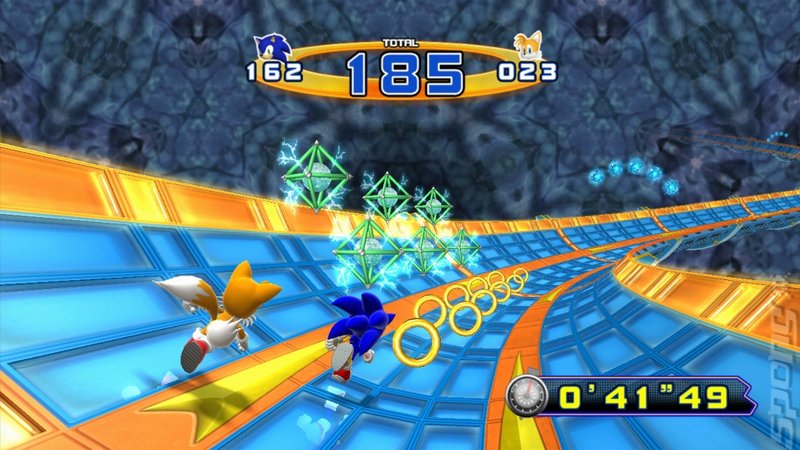
And then there are the special stages, which are reminiscent of Sonic Rush’s special stages, which means that they’re reminiscent of Sonic 2’s special stages, which have been recycled by the franchise a number of times now.  Sonic 4: Episode 2 unfortunately doesn’t even go as far as Sonic Heroes or Colors DS did to cover this up; you’re just running forward through a half-pipe, collecting Rings and dodging obstacles. Don’t get me wrong; the stage is still plenty fun and does add a couple of new twists, and the last few are pretty dang tough. It’s just that the Sonic 2 special stage is getting kind of old at this point, and it’s about time for them to come up with a new one. And if not that, then they really need to give the Blue Sphere special stages from Sonic 3 & Knuckles a nod. Those were the best in the whole freakin’ series.

Sonic 4: Episode 2 allows you to play co-op with a friend, either locally or online, in which one player takes control of Sonic and one takes control of Tails. I’m not much of a co-op guy myself, but I did try it out, and it seems to work pretty well. The one thing I found fault with was that both players share one Ring counter, basically meaning that if one player gets hit, neither player will have any Rings. Honestly, I think that it would have worked better if they either had separate Ring counters or only half of the collected Rings were lost if one of them took a hit. Regardless, because of this, you will want to play co-op with someone as skilled as you are, and also because it’s easy to outrun other players thanks to how fast the game moves.

One more thing: if you own both Episodes 1 and 2 on the same console, you will actually have access to a free bonus episode called “Episode Metal”, in which you play as Metal Sonic through four levels from Episode 1 in a story that bridges the gap between Episodes 1 and 2, and the four levels feature different designs from their original incarnations. Unfortunately, since I bought Episode 1 on Wii, which Episode 2 is not available for, I probably won’t be playing it anytime soon. I can’t say it’s not cool that they did that, though.

The Good:
+ Great graphics 
+ Greatly improved physics 
+ Team gimmick works well 
+ Generally solid level design 
+ Co-op is good 
+ Free bonus episode if you own both main episodes on one console 
+ Great boss fights…

The Bad:
- …Except for the first 
- Too much automation 
- Hit or miss soundtrack 
- Sonic 2-style special stages are getting old
--------------------------------------

So how does Episode 2 fare when compared to the classics? Well, I’m afraid Dimps still has a ways to go before they can reach that standard of quality. Sonic 2 and 3 & Knuckles are, after all, some of the greatest 2-D platformers ever made, though, personally, I don’t think Sonic 4 will ever get that good no matter how many episodes it gets. In its own right, though, Sonic 4: Episode 2 is a very enjoyable 2-D platformer despite the flaws and it’s a significant improvement over Episode 1. I personally found it to be worth the money I paid for it, and you just might, too. Until next time, adios.

Grade: B

Sunday, May 13, 2012

Kingdom Hearts 10th Anniversary Reviews: Birth by Sleep


---------My Rating System--------

A(-)(+) A top notch experience all the way through. It may not necessarily be perfect, but whatever flaws it does have won’t take you out of it or make it any less worth your time. (Super Mario Galaxy 1 and 2)
B(-)(+) A very fun experience bogged down by some significant problems, whether they’re related to the story, gameplay, or both. However, it’s still a good game and worth the price of admission. (Kingdom Hearts: Recoded)
C(-)(+) A mixed bag.  Generally fun to some extent and may shine in some areas, but is either too flawed to fully recommend or far too short for its price. Conisder it for a reduced price, at least if you’re a fan of its genre. (Rayman 3D)
D(-)(+)  Subpar. It may not be terrible, but it is severely flawed and whatever it does well ultimately fails to save it. Even if you’re a fan of the genre, this is barely a bargain bin purchase.  (Sonic Heroes)
F Insipid, disgusting, despicable, and insufferable. It is a scar on the face of human accomplishments that time shall never heal. The best thing we can do is avoid playing it at all costs. It is the only way to prevent its parasitic disease of awfulness from spreading. (Shadow the Hedgehog)
-------------------------------------


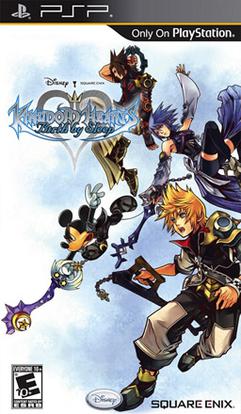
This is it, folks. We have finally reached the last stop on our epic journey through the wonderful world of Kingdom Hearts…at least for the next few months. And what a great one we have today. Kingdom Hearts: Birth by Sleep is an installment for the PSP, and is the second most recent game in the series (behind Re:coded), which came out in 2010. It serves as a prequel to the series, starring three new characters rather than Sora and company and its story is meant to provide a lot of revelations that connect to events in future games (chronologically) and will have an effect on events in the upcoming sequels. I actually don’t remember being all too excited for this one, and I’m not quite sure why. Of course, the fact that it was on the PSP may have had something to do with it. It kind of told me that it would likely be a smaller scale adventure than the two PS2 games. Not to mention, I didn’t own a PSP when it was announced, and even when I did get one, it was a used one that hardly worked and wouldn’t take the update needed to play games released after 2009. And, of course, I’m sure being massively disappointed by 358/2 Days, which came out just a year prior, didn’t help much either. Fortunately, I did get a Slim n’ Lite along with the game a couple of Christmases ago, and it not only exceeded my expectations, but it thoroughly blew them away. Ladies and gentlemen, Kingdom Hearts: Birth by Sleep is quite possibly not only the best game in the series thus far, but my current favorite RPG. The statement may sound fanboyish, and, well, maybe it is a little bit, but I do have my reasons for placing this game on such a high pedestal. Let’s take a look.
--------------------------------
The story of Birth by Sleep is seen from the perspectives of three different Keyblade wielders: Ventus – who notably looks a great deal like Roxas - Terra and Aqua, three great friends. All three of them train under Master Eraqus to eventually pass the Mark of Mastery exam and officially become Keyblade Masters, whose job it is to protect the worlds from the forces of darkness. Shortly after the game begins, Aqua and Terra take the exam. Aqua passes with flying colors, but Terra unfortunately falls short, as he can’t quite keep the darkness in his heart in check. For those who are not already familiar with the series, in the Kingdom Hearts universe, darkness is a force that lies in the hearts of all human beings and those who attempt to control it or use it for power are usually either consumed by it or turn evil. Xehanort, a fellow Keyblade Master, insists that darkness is not an inherently negative force and that light and dark should exist in balance. Going against Master Eraqus’s teachings, he encourages Terra to use and control the power of darkness, and this conflict is a central focus of Terra’s storyline. Ventus, or Ven for short, finds himself chasing after Terra after he is visited by a mysterious boy in a mask named Vanitas, who tells him that he will never see Terra again. However, Ventus is not meant to leave the Land of Departure (the opening world) and Eraqus sends Aqua after him. Of course, our heroes have another reason to be flying around the universe. All throughout the worlds, dark creatures called Unversed are popping up that are proving to be a grave threat, and Aqua and Terra are tasked with exterminating them.
From left to right: Aqua, Terra and Ventus.
You may have noticed that throughout my Kingdom Hearts reviews, I have actually given a lot of emphasis and praise to the games’ storylines. It’s actually pretty strange that a series that started as just a giant crossover between Disney and Final Fantasy could end up having such a compelling story and mythology on its own, and Birth by Sleep, more so than any other game in the series (with the possible exception of Chain of Memories), stands proudly alongside Kid Icarus: Uprising as an example of how you can find very complex and engaging stories in odd places. ...Okay, I guess I will admit that the script is a bit hit or miss with this one. It works for the most part, but there are a disconcerting number of moments where it devolves into cheese and, like with Riku’s story in Re:Chain of Memories, they really need to shut up about the “darkness”. Even for a huge fan like me, hearing them talk about the “darkness” all the time eventually gets kind of annoying and lines like “Has the DARKNESS taken YOU, TERRA?!” are just cringe worthy. Aside from that, though, this story is awesome. I didn’t like Ventus, Terra and Aqua quite as much as Sora and co., but they’re still great characters and you really feel like there’s a significant bond between them. Voice acting is mostly superb, as usual, and the cast includes such names as Leonard Nemoy, who does the voice of Master Xehanort; Mark Hamill, who does the voice of Master Eraqus; Haley Joel Osment, who does the voice of Vanitas and previously did the voice of Sora; and Jesse McCartney, who does the voice of Ventus and previously did the voice of Roxas. However, Terra’s voice actor, Jason Dohring…wasn’t so good, I hate to say. He’s okay for the most part, but there were a lot of times where he just sounded bored.

The game also adopts a Sonic Adventure approach to telling its story, as each character has his or her own playable storyline and your understanding of the events of each of them the first time through will depend on the order you played them in. The stories of the Disney worlds also all play out across all three of the storylines, which is another thing I found interesting. There is even a “Final Episode”, which you unlock by beating all three of the other storylines and finding all twelve of the secret readable reports written by Xehanort. Oh, I’m actually surprised I didn’t mention this already in any of the other reviews, so my bad. Basically, in this game as well as Kingdom Hearts I and II, you can find reports – written by a guy named Ansem in KH1 and 2 and Xehanort in this game. They chronicle the various musings and thoughts of these characters as well as the research they’ve done and experiments they’ve performed regarding objects of interest. They actually give a lot of background to the stories of these games and the motivations of these characters, and clear up what may otherwise have been some pretty significant plot holes. They’re really interesting to read and are a shining example of how much effort the writers put into the storyline and continuity of this series.

The plot of Birth by Sleep, in general, is possibly the most interesting and engaging in the series thus far. Also, it’s actually pretty unique as a prequel in that, while it takes place before the first game in the series, it leaves some loose ends for future sequels to resolve. And while the fact that it’s a prequel makes it more accessible to series newcomers, some scenes and elements and even appearances by minor characters are going to mean the most to series oldbies. Thus, I still recommend newcomers start with the original Kingdom Hearts and play in order of release date. If you don’t care, though, starting with Birth by Sleep could be a very interesting experience that will change your entire understanding of the events of the next chronological installments.

Birth by Sleep is highly impressive on the visual front, especially given the system that it’s on. Seriously, these graphics are almost on par with those of the PS2 games, especially when it comes to character models and animations. I’d probably even call it one of the best-looking games for PSP. This high visual quality does come with a few unfortunate strings attached, but Square did provide some easy remedies. Loading times are long and frequent, but you can get rid of this problem by installing the game onto your PSP, an option you are given before you start the game. The framerate also suffers quite a bit, but the CPU speed can be bumped up to get rid of this problem at the expense of some of the PSP’s battery life. Personally, I thought the trade-off was worth it. The soundtrack is all-new this time around (minus a few tracks), since the game uses all-new worlds, and it’s…possibly the best one Yoko Shimomura has composed yet. For the record, that’s saying a lot. New music has also been composed for the cutscenes of the game, and those are probably my favorite tracks of the bunch. The track that played during one scene was so sad that I actually empathized with Cinderella. Think about that. When it comes to world BGM’s, my favorite track would have to be that of the final world, which sets a dark tone and atmosphere the likes of which I doubt I’ve seen in the series before.

Moving on now, Birth by Sleep is considered a main game in the series and thus, as mentioned before, it gives us a selection of new Disney worlds, and a pretty diverse one at that. Movies represented this time around include such classics as Snow White and the Seven Dwarves, Cinderella, Sleeping Beauty, and Peter Pan as well as the more recent Lilo & Stitch…well, the first ten or so minutes of it, anyway. Peter Pan was represented in the series before, but the world seen here is nothing like that of the first game or 358/2 Days. The only world that really makes a return is Olympus Coliseum, based on Hercules, but the fighting tournament-style mini-game is still fun, so I’ll forgive them. Oh, and it has Zack Fair from Final Fantasy VII and Crisis Core in it. Yeah, I hope you like him, because that’s the only Final Fantasy cameo in the game.

Considering that the game is on less powerful hardware, it should go without saying that the worlds will be quite a bit smaller than what was seen on the PS2. That said, I think they did a great job with what they had. There are still plenty of treasures and such to find and the worlds feel very diverse, usually offering their own challenges for each character and even some neat gimmicks. Disney Town, for instance, is the designated mini-game world and the world based on Lilo & Stitch allows you to turn off the gravity in some areas and soar to massive heights with each jump, which is used for platforming. Speaking of which, I mentioned in my review of the first game that some people seem to have a problem with the platforming elements of the series. I’ve never minded them myself; in fact, I actually found the platforming of Birth by Sleep to be pretty enjoyable. It’s nothing amazing, but it offers some fun ideas, if nothing else. All three characters will be visiting the same worlds throughout the game, but they all have different challenges to overcome and bosses to fight and you will see different parts of the world’s storyline depending on which character you’re controlling. The fact that each character feels different to control and has his or her own specialties also helps to keep things from feeling redundant. Ven is the balanced fighter, Terra is great with physical attacks, and Aqua is skilled with magic, which will likely influence how you choose to develop each character.

This brings me to where things get really, really awesome: the combat system, and if you ever thought that previous games were too focused on button mashing, consider your prayers thoroughly answered! See, this game replaces the abilities of Kingdom Hearts I and II with a Command Deck, whose capacity increases as you continue through the game. You fill this deck with the abilities you receive over the course of the game, and use them via the triangle button after they have charged up. You get better commands as you go through the game or make them yourself (more on that later), and the commands you do have will level up as you go along. As you attack enemies, a bar will fill up above the Command Deck. You have upgradeable finishers that you can use, but depending on which commands you used to fight – elemental magic, for example – you could enter a Command Style, such as Diamond Dust, Firestorm or Lightning Bolt. Some Command Styles are also specific to each character, i.e. Ventus’s Fever Pitch, Terra’s Critical Impact and Aqua’s Spell Weaver. Using different commands during a Command Style could allow you to use other ones if you have them unlocked, such as Blade Charge, which turns your Keyblade into a giant glowing sword. These Command Styles not only augment your attack power or add elemental attributes to it, but also make your attacks lightning fast and really awesome to watch. It is worth noting, however, that you can’t abuse commands, as each command will need some time to charge up before you can use it again. See, it’s through this system that Birth by Sleep accomplishes the same fast-paced, flashy and fun combat that Kingdom Hearts II had while adding leagues of depth and strategy to it, and it works incredibly well.

That’s not even getting into just how customizable it is. You are given full control over what commands you have in your deck at all times, limited only by which ones you have collected in the game. Some commands actually come with other abilities attached to them, such as adding onto your default combo, and if that command levels up all the way, that ability is yours to keep. And then there’s the Meld Command option, which allows you to combine two commands to make a brand new one. Experimenting with this is a great way to get new abilities out of unwanted of Commands, and can also allow you to get better spells early on in the game. You won’t always know what you’re getting, so there may be risk involved if you’re wagering a good command, but who knows? You might get something really useful out of it. Sometimes, you can even combine magic spells with physical attacks to make an elemental version of said physical attack or a version that induces a status effect. Essentially, ability-wise you are given a lot of control over how your character develops, which just adds even more depth to what may be my favorite combat system in any RPG that I’ve played.

One more thing. I criticized the boss design of Kingdom Hearts II for being too easy and lackluster. So, does Birth by Sleep improve upon that as well? As a matter of fact, it does. A lot. In fact, if you’re playing on Proud Mode, a lot of these bosses are…pretty brutal, honestly, and some of them will easily one-shot you if you’re not at the right level. Heck, there are some that I remember having a lot of trouble with the first time through on Standard Mode. Oh, and Proud Mode isn’t even the highest difficulty level. That would be Critical Mode. It downright scares me to think about how hard that might be. All in all, bosses in Birth by Sleep are really difficult and a lot of fun to fight.

The Good:

+ Awesome story 
+ Great visuals 
+ Soundtrack is the best yet 
+ Three playable storylines 
+ New Disney worlds 
+ Lots of diversity 
+ Solid platforming elements 
+ Amazing combat system 
+ More customizable than ever 
+ Great boss battles 
+ Great voice acting…

The Bad:

- …Except for Terra 
- Sometimes cheesy script

-------------------------------------------

After the disappointing Days, this game was just what I needed. It had just about everything I loved about the PS2 games and more, and my appreciation of it has grown even more after playing it again. This may very well be the most fun I’ve ever had with an RPG combat system, and the story, despite the problems I had with the script, is awesome, as usual. If you have a PSP, you owe it to yourself to play it. I’m giving it the same grade as Kingdom Hearts II because I can’t really give it an A+ and there are some things I believe Kingdom Hearts II does a bit better. However, overall, I do believe it to be a better game. It’s the best game in the series, possibly one of the best games for PSP, my current favorite RPG, and one of my favorite games in general.

Grade: A

And thus our journey through the Kingdom Hearts series finally comes to an end, at least for the moment. There is one more game in the series, Kingdom Hearts Re:coded, but I already reviewed it. If you want the short version, though, it has a pretty weak story, but it provides its own fun take on Birth by Sleep’s gameplay style and has a great deal of gameplay variety, which makes it a very fun little side game that’s worth picking up.

Playing through these games again was a really great experience for me. Few game series have left the kind of impact on me that Kingdom Hearts has. When I was just seven years old, the first game showed me just how well a game could tell a story, and Chain of Memories and Kingdom Hearts II continued to do so later on. Even 358/2 Days, which I was very close to giving a negative grade before the end, gave me a very nice and even heartbreaking storyline. (ba dum tssh) Dream Drop Distance is coming to the States soon, and it looks like another awesome installment to the series. As for my next review, that will probably be for Sonic the Hedgehog 4: Episode 2, which hits PSN this Tuesday and XBLA on Wednesday. Farewell for now.
Cue credits sequence.


Saturday, May 5, 2012

Kingdom Hearts 10th Anniversary Reviews: 358/2 Days

So it is finally time to once again discuss the (mostly) wonderful Kingdom Hearts series. Yes, sorry that this took me so long to put out. See, the Kingdom Hearts game we’re discussing today is 358/2 Days, and, well, spoiler alert, I don’t like this game very much. I began this Kingdom Hearts extravaganza with the knowledge that I would eventually have to tackle this monstrosity (which I had never actually beaten before), but I had no idea that it would be this…difficult. Anyway, Kingdom Hearts: 358/2 Days is the first of two DS installments – the other being Re:coded, which I reviewed last February – and is a mission-based game that focuses on the character Roxas, introduced in Kingdom Hearts II, during his 358 days among the awesome black-cloaked group of villains known as Organization XIII. I’m all for that and there are definitely some things that this game gets right, but in the end, it proves to be the lowest point in the series’ history. Let’s delve into the game, why don’t we. 


 ----------------------------------- 


358/2 Days takes place before, during and after Chain of Memories and before Kingdom Hearts II. As I said before, it focuses on Roxas, at this point a newly-born Nobody (an empty shell with no heart) who has the power to use the Keyblade. He is inducted into Organization XIII, the group of powerful Nobodies introduced through Chain of Memories and Kingdom Hearts II, and soon after he joins, a new member named Xion steps in, whom also happens to be a Keyblade master. Roxas then begins going out on missions with Xion and the other members of Organization XIII and concluding every mission by having ice cream with her and Axel, a fellow member. As he does this, he learns more about himself, the world, his purpose, the Organization and, of course, friendship, until crap inevitably hits the fan toward the end and Kingdom Hearts II begins. 
From left to right: Axel, Roxas and Xion.


The storyline is probably the only thing I seriously enjoyed about Days. Roxas and Axel were already established characters, but the game does a very nice job of developing them further. Xion actually steals the show here, partially for reasons that are a bit spoiler-y, so I won’t say much other than that she’s a great character. I always enjoyed seeing the three of them interact and I was emotionally invested in the story by the end, where things really start happening. The game is also separated into short days, as the game is basically about how Roxas lives and works day to day. I thought this was an interesting approach to telling the story that was handled well. The script is also solid this time around, and the voice acting, while there isn’t very much of it, is very well done. In the end, the story is probably the only reason why you might want to play the game. 


Yes, while the story is very good, the gameplay ultimately proves…very lackluster, which is why I advise you approach this one with caution. Well, before I start ripping this game to shreds, I should say that there is one thing I liked, and that was the character customization system. As you complete more and more missions, you gain slots on which you put “Panels”. These Panels contain your weapons, abilities, items, magic, and upgrades thereof. There are some Panels (mostly weapon and ability Panels) that take up extra spaces that could be used for other Panels; however, said Panels can often be linked to Panels that upgrade said weapon or ability, and some offer other effects such as upgrading your magic spells or doubling your experience levels. Overall, it’s a very strategic system that works very well. 


Beyond that, though, Days…has absolutely nothing of value to offer, gameplay-wise. One could argue that combat in Kingdom Hearts I and II was mostly button mashing, yes, but at least you could still use magic and other such moves to mix things up a bit and, in Kingdom Hearts II’s case, you probably wouldn’t care anyway because of how fast, flashy and satisfying the combat was. In Days, combat is just button mashing, and combat feels much slower-paced at that, which sucks a lot of the fun out of it and replaces it with boredom. You can still use magic, but you’ll barely ever use it because the game makes one of the most idiotic design decisions I’ve ever seen. By that, I mean that it puts a limit on how many casts of each spell you can bring with you into each mission, and if you want to take any abilities or items with you, you’re probably not going to be able to take too many spells. Even aside from that it’s very limiting, as there isn’t a terrible amount of different combos and moves at your disposal and the Reaction Command from KH2 is nowhere to be seen. Enemy variety isn’t exactly this game’s strong suit, either; most enemies are actually just recolors of other enemies you’ve fought, and they’re all fought the same way: mashing the “A” button over and over and over again until you get carpal tunnel syndrome. It gets incredibly repetitive and boring very quickly, and I really don’t see why the combat had to be so much worse than Kingdom Hearts II’s. You can’t really say it’s because it’s on the DS because Re:coded was for the DS, too, and its combat wasn’t significantly worse than that of the PS2 games. I just…don’t know what happened here. 


And there are the bosses, which pretty much suffer from the same problem, except it’s magnified here because boss battles drag on for so long. Their health bars are inhumanely high and from my experience you don’t even do that much damage. It’s basically ten to fifteen minutes or even longer of jump, mash the “A” button, fall, rinse, repeat. Maybe you’ll have to chase the boss around the arena, too, which…isn’t fun in the least. Also, there were at least two bosses in the game that almost made me consider giving up and watching the rest of the story in a playthrough on Youtube. The first was the Leechgrave, which was downright cheap. It had no visible pattern for its attacks, one of which was a scratching attack that would do devastating damage if you got close. Well, guess what? You have to get close to attack! Oh, and it has a poison attack that drains your health. Have fun! The second was the Ruler of the Sky. For one thing, many of its attacks have a far larger hit box than they should have. For another, it reminds me of that stupid last room in Final Fantasy X because locking onto it gives you a nauseating rotating camera since it’s always moving and there are actually icicles sprouting from the water below to stop you dead in your tracks. It’s so similar that it’s almost scary. At least this game lets you skip cutscenes… 


Finally, the missions are incredibly repetitive. Even when they pretend like they’re asking you to do different things, they really all boil down to just killing Heartless, or mashing the “A” button repeatedly, in other words. You visit the same worlds over and over again dozens of times, as well. Exploration isn’t very interesting, either; the worlds are very small and certain areas are closed off during different missions, and these are all the same worlds from the first two main games besides. To Days’ credit, there are times when it attempts to change things up, but it doesn’t really work. Halloween Town forces you to use Jack Skellington’s dog Zero to scout out Heartless by giving him treats, which just makes things more tedious, and Olympus Coliseum once again takes place in fighting tournaments and mini-games that…just aren’t fun here. Oh, and there are also some insultingly easy stealth sequences and puzzles sprinkled here and there. 


When it comes to aesthetics, though, Days doesn’t fail to please. Given the system it’s on, Square did about the best they could with the visuals, and, well, they’re not half-bad and the framerate is very good. The soundtrack is also fantastic, as always, though it’s…mostly just the exact same BGM’s from the two main games, along with Sanctuary from Kingdom Hearts II. As for the new tracks that are here, though, expect Yoko Shimomura’s usual magic.


 The Good: 
+ Great storyline 
+ Solid script and voice acting 
+ Nice customization system 
+ Great visuals 
+ Awesome soundtrack 


 The Bad:
- Boring combat 
- Awful boss battles 
- Incredibly repetitive 


 --------------------------------- 


 By the end of 358/2 Days, I was a little happy that I had experienced it if only because of the story, so I really can’t call it a bad game. However, the gameplay experience was…pretty agonizing, to be frank, so I can’t quite call it a good one either. Ultimately, I’d say it’s…a mediocre game. I guess it’s kind of worth playing, but don’t pay too much for it. Fortunately, this doesn’t hint at a trend in the quality of games to come. Next time, we’re looking at the fantastic Birth by Sleep, the last game on our list until I can get my hands on Dream Drop Distance. See ya. 


 Grade: C-