Not long ago, I took upon myself the task of reviewing each
game in the Kingdom Hearts series from 2002 to 2010, in honor of the tenth
anniversary of said series. I completed my mission three months ago with
Birth by Sleep, but a new day brings new adventure, and so I once again find
myself in front of the computer, typing up a massive, detailed analysis as to
why Kingdom Hearts is mankind’s finest accomplishment since we reached the peak
of our evolution as a species eons ago. All exaggerated praise aside, after ten
years of Kingdom Hearts, we all should have a good idea of what to expect from
Dream Drop Distance: spiky-haired, androgynous protagonists, nostalgic romps
through Disney worlds and meetings with the characters thereof, an unreasonable
amount of intense bloodless carnage carried out with a giant key, and an
exceptionally convoluted storyline that will throw a seemingly endless amount
of increasingly bizarre plot twists at you until your brain inevitably ceases
to function.
They're all kind of the same person. Sort of. I could explain if you have a couple of hours to spare.
Yes, across the past ten years, that has certainly proven to
be one of the more controversial aspects of the Kingdom Hearts series: the
complicated narrative. I’ve made it pretty clear at this point that I’m rather
a fan of it, but it’s not been received so well by everyone. Of course, this
could be partially because some people simply don’t appreciate such complexity
in general, which is understandable, because storylines such as that of Kingdom
Hearts can get quite confusing if you don’t pay a lot of attention and also
tend to become very…strange, I’ll say. Personally, though, I rather enjoy
convoluted storylines so long as they’re careful to avoid plot holes, feature
solid characters and don’t devolve into complete nonsense. The story of Metal
Gear Solid 4: Guns of the Patriots, which I would probably call one of my
all-time favorites, is a perfect example of such a story: crazy and
ridiculously complex, but deep, incredibly involving and far from stupid. It
also gets bonus points for ret-conning many of the dumber elements of MGS2’s storyline so that they made much, much more sense.
Oh, by the way, these guys are all the same person, too. Kind of.
Of course, even I, being as big of a Kingdom Hearts fanboy
as I am, wouldn’t insinuate that the series approaches MGS4’s standard of
writing. The games’ scripts can at times be a tad hit or miss, featuring
occasional sprinkles of uncalled-for cheese and generally awkward sequences. Some
entries are worse about this than others – Birth by Sleep in particular has
given us such lovely gems as “Has the DARKNESS taken YOU, TERRA?!!” and 3D,
while one of the better ones in this regard, still has its more…”off-putting”
lines. Kingdom Hearts has never prided itself on accessibility, either; start
with almost any game except for the first and you will probably be completely
lost. Even Birth by Sleep, despite being a prequel, may have some aspects that
won’t make much sense to new players. Kingdom Hearts 3D: Dream Drop Distance,
fortunately, does away with this problem, as synopses of each of the previous
games will unlock at relevant moments in the storyline.
As for the storyline of the game in question? It’s…probably
the craziest one yet. Throughout the game, you can tell that the story is
building up to something pretty significant, and it definitely delivers. The
revelations and plot twists that come at the end of 3D turn the series’ entire
continuity upside-down – and if you thought Birth by Sleep already did that,
you haven’t seen anything yet. You are not
going to this coming, but it’s definitely handled well and adds deeper meaning
to the events of the franchise’s other games. Most fans such as I will probably
eat it right up and it’s setting itself up for what will certainly be a
conclusion of epic proportions. When it comes to other matters of importance,
you won’t find any Final Fantasy cameos this time around; rather, the opening
world is populated by characters from another popular Square RPG, The World
Ends With You. I’ve never played it myself, but the characters seem very
likable, so I’m definitely interested. The storyline is told from the
perspectives of both Sora and Riku, making his first fully playable appearance
since Chain of Memories, and you alternate between them constantly as the game
goes on. What’s interesting is that the game doesn’t handle the Disney worlds
like Birth by Sleep did, having the movie’s storyline play out across the three
characters’ scenarios with the events in one storyline relating to events in
another. Rather, Sora and Riku both visit different versions of each world – it
makes sense in context – and two separate storylines that are drawn from the
same movie play out.
As for the movies that were chosen for 3D, our list isn’t
quite as extensive as that of other titles. The Hunchback of Notre Dame,
Pinocchio, Tron Legacy, Fantasia, and, curiously enough, a direct-to-video
movie called Mickey, Donald, Goofy: The Three Musketeers are the movies we will
be visiting in 3D. Before entering the world with either character, you are
required to complete a “Dive” stage, which is basically the Gummi Ship without
the Gummi Ship and there’s a bit more variety to these stages as well. As
already mentioned, you visit the same worlds with both characters, but like in
Birth by Sleep, they both have different challenges to overcome and at times
even visit different areas of the worlds entirely. For instance, in the
Pinocchio world, Sora visits the amusement park and ocean sections of it, while
Riku’s portion takes place inside the whale, breathing new life into a familiar
location from the series. You alternate between both characters constantly,
whether it’s of your own accord or not, thanks to the “Drop Gauge”, which
decreases as you spend time with either character. If it depletes completely,
you will be forced to switch to the other character, and you will be allowed to
use any “Drop Points” you acquired to give them various bonuses. This was
obviously done for story pacing reasons, and, to that end, it succeeds. Some
find it intrusive, especially in boss fights, but there are items called “Drop-Me-Nots”
that restore some of the Drop Gauge, and you generally happen upon them quite
often.
Anyway, those are certainly very diverse locations, yes, but
when compared to previous major titles, this does come off as a meager amount. Fortunately,
the game makes up for this. While there aren’t as many worlds this time around,
the worlds we do get are the absolute largest the series has seen yet, giving
you massive areas to explore. Accordingly, there is no shortage of treasures
and other assorted secrets hidden within each of the worlds, making exploration
very worthwhile. Of course, to explore effectively, you will have to make use
of 3D’s primary gameplay mechanic. Yes, it’s time to discuss that.
OH BOY
Really, mere words cannot describe how utterly amazing
Kingdom Hearts 3D’s “Flowmotion”, as they have so lovingly named it, is. From the
very first trailers, watching Sora and Riku swing around poles and ricochet off
walls, I knew that this was going to be something special. No doubt, it’s one
of the coolest and most useful things ever programmed into a video game. By
simply dashing onto a pole or wall, you activate a technique that suddenly
allows you to soar to massive heights, jump off or even climb up walls, and fly
around at the speed of light. Grinding on rails, pipes, and wires as if you’re
Sonic the Hedgehog is also rather common, and the Flowmotion in general makes
merely traveling from place to place a great joy, and you will be required to
make use of it to reach many of the game’s secrets. Flowmotion isn’t broken, as
you can only perform so many actions without making contact with a wall or a
pole of some sort, which makes it that much more satisfying when you use it
skillfully, soaring from wall-to-wall with such finesse, grabbing onto a pole
in preparation for another jump and then taking to the skies once more until
you reach a dead end. Words can’t do it justice, of course; you’ll have to experience
it for yourself. What’s even more interesting is that many of the worlds give
the Flowmotion uses of their own. From jumping across rooftops in La Cite des
Cloches, to grinding on lines of data in The Grid, to riding a freaking
rollercoaster in Prankster’s Paradise, and even to reaching the boss of Sora’s
section of Symphony of Sorcery, Flowmotion proves an incredible addition that
will no doubt make any previous game feel limiting by comparison.
Flowmotion is also put to very effective use in the realm of
combat. Yes, with this being a Kingdom Hearts game and all, you can expect a
lot of that stuff. This time around, Sora and Riku are actually fighting off “Dream
Eaters”. They’re much…cutesier than previous foes, but they still put up quite
the fight. As far as combat is concerned, Flowmotion gives you access to
several new moves, including a ground pound, a spiral attack, a spinning
attack, and various others that depend on how Flowmotion is being used. One
that is particularly fun is an ability that allows you to grab onto large
enemies with your Keyblade and then fling them across long distances. Combat retains
the Command Deck used in Birth by Sleep and Re:coded, which you customize using
the various commands you get through various means over the course of the game.
It’s still not quite as deep as it was in Birth by Sleep, getting rid of the
Command Styles and lacking the ability to meld commands, but it makes up for it
by giving you a much wider variety of commands at your disposal. 3D also adds
another all-new mechanic to the combat system that makes use of the 3DS’s touch
screen: the Reality Shift. During combat, you may see a pink circle form around
the target reticle of an enemy or object; press “X” and “Y” simultaneously, and
you will enter Reality Shift and control will switch to the touch screen. The
exact move depends on the world you’re in; the Reality Shift for Traverse Town
allows you to fling enemies at each other, the one for Prankster’s Paradise
encases an enemy in a bubble that you then ride to trap other enemies in, the
one for Symphony of Sorcery is a rhythm game, and so on and so forth. Ultimately,
while it does remove some of Birth by Sleep’s more interesting features, what
it adds in return ensures that the combat of Kingdom Hearts 3D is just as much
fun.
In case you’re wondering, no, you still won’t be accompanied
by Donald in Goofy as in the days of old, but you won’t be entering these
worlds alone either. There are actually two types of Dream Eaters. The ones you
have to fight are Nightmares, but there are also Spirits, which fight alongside
you when you create them. These Spirits also have Link Gauges that fill as you
fight, and if they fill all the way up, you can team up with that Spirit to
perform a devastating attack as Sora or combine with it to change your moveset
as Riku. Spirits don’t just help you in battle, though; by interacting with
them through petting them with the touch screen and playing various mini-games,
you can build up Link Points. These Link Points are used on a Spirit’s Ability
Grid, which contains various stat boosts as well as several useful commands, and
the Spirits are so ridiculously lovable that it doesn’t come off as busywork. Be
aware, though, that if a Spirit dies and you aren’t able to save it in time, it’s
gone for good. And that’s really sad.
The visuals of Kingdom Hearts 3D are simply gorgeous by 3DS
standards; in fact, I’d say it’s the best-looking game released for the console
thus far. The 3D effect is also particularly impressive, especially in the Dive
stages. As usual, the soundtrack is sublime, and, since this game is a
celebration of ten years of Kingdom Hearts, you can expect to hear some
nostalgic tracks from some older games. One thing that’s really interesting is
the fact that the same music used in the movie serves as the soundtrack for the
Fantasia world. All in all, it’s pretty awesome.
Kingdom Hearts 3D is one of the shorter games in the series,
but there’s a great deal of replayability. There are tons of secrets to find,
extra missions to complete and a lot of collectible Trophies, received by
performing various tasks. There is also a card-based mini-game reminiscent of
Chain of Memories called Flick Rush, which is played with your Spirits. It’s
actually quite fun and features several matches. And, as any fan would expect,
there’s the secret ending that hints at the next game, which you can always
watch on YouTube! …*ahem*…That is, if you’re too lazy to unlock it legitimately
like a REAL gamer! Hehe!
Overall, I didn’t actually expect Kingdom Hearts 3D to blow
me away as much as it did. Of course I was expecting to have a great time with
it, but I didn’t think it would surpass Birth by Sleep as the series’ pinnacle
and I definitely didn’t expect that I wouldn’t have any real problems with it.
I mean, I suppose I have a few nitpicks: the framerate can chug a bit at times,
for one, and while the script is mostly decent, like I said, there are a couple
of stupid lines. But on the whole, I
didn’t feel like these were anywhere near severe enough to knock the game’s
grade down. Kingdom Hearts 3D is borderline perfect. It’s the best game in the
series thus far, a must-have for the 3DS and my personal favorite of the titles
released for the console so far. Square only knows what the future holds for my
favorite RPG series, but whatever it is, it has some pretty big shoes to fill. It
may very well be the long-awaited HD Kingdom Hearts III we’ve been begging to
receive for oh so long.
Ladies and gentlemen, five days ago today, I witnessed this:
This is something that should have happened several years
ago, but hey, better late than never, as they say. I always thought that Nights
into Dreams would be perfectly suited for an arcade release, considering its
play style and general size. Not to mention that my own SEGA Saturn hasn’t been
functional for a very long time, which unfortunately still leaves me unable to
play this wondrous and nostalgic masterpiece until this remastered version is
finally released, a fact that greatly saddens me. I still remember receiving
the dusty old thing around six years ago and Nights alongside it, ready to play
this Sonic Team cult classic that I had never experienced before. I wasn’t sure
what to make of it at first, but once I was into it, boy, was I ever into it. The
magnificent soundtrack, the amazingly creative levels, the surprisingly
well-aged abstract visual design, the simple storyline that expressed so much
without a single line of dialogue, the fluid gameplay, the perfect controls,
the general originality…good Lord, it was an experience. It was a very short
game, but I replayed it far too many times to count. My SEGA Saturn’s save
battery was dead long before I received it, so I had to start over each time I
played, but did I care? Not in the least. To my 10-year-old mind, this was one
of the best games I had ever played, and I actually wouldn’t expect my opinion
to have changed too drastically over time. Of course, I suppose I will
ultimately have to wait and see until I have finally experienced it again, but
still, I’m expecting to have a pretty freaking good time.
Ah…and reminiscing about Nights into Dreams reminds me of
its heavily belated sequel, Journey of Dreams. Had you asked anyone so many
years ago, they would certainly tell you that this game simply called for a
sequel, but years passed and there was no word. Nights received many cameos in
later SEGA games and there was a prototype for a new Nights game on the
Dreamcast, but it never went beyond that stage. Then, finally, in 2007, a
sequel was announced, for the Nintendo Wii no less. See, this was back before
we realized that the Wii is a terrible console that wants to eat everyone’s
babies, and instead were dreaming of all of the ways in which the new Nights
game would take advantage of the Wii’s amazing and innovative technology. Who
gives a crap that Sonic Team had only just been responsible for two of the
worst abominations to ever be crapped out of their core franchise? They were making a new Nights game, and it was going to
be a masterful sequel that would do the utmost justice to its eleven-year-old
predecessor. So, did it succeed after all? Well…it’s a bit hard to say. Let’s
just dive right in to the controversial Nights: Journey of Dreams.
-------------------------------
Since I don’t want to start the review on a negative note, I
believe I should begin by talking about the visuals and music. The visuals of
Journey of Dreams are for the most part simply splendid; the game’s worlds
inherit the abstract and colorful aesthetic design of the first game, which is,
of course, appropriate, since the game takes place in a dream universe. The
worlds are very diverse, as well, with each having its own look. Cutscenes
do suffer from a bad framerate and there’s some slight uncanny valley on the
human characters in both in-engine cutscenes and FMV’s, but on the whole,
visual design holds up very well even five years after the game’s initial
release. The soundtrack is…probably the game’s biggest strength. In fact - no
exaggeration - it may very well be one of the greatest soundtracks I’ve ever
heard from a video game. It’s all just wonderfully composed, upbeat and
extremely catchy. Yes, the lyrics to “Dreams Dreams” are just as cringe worthy
as ever, but hey, at least the instrumental version is great.
But then, we have…*sigh*…the story. The original Nights told
a very simple storyline about two children who are dealing with insecurities in
their waking life and, throughout their journeys through the dream world,
Nightopia, with the mysterious creature Nights, they grow more confident and courageous
and are eventually able to work together to defeat the evil king of nightmares,
Wizeman. The endings show them fully conquering their fears and even meeting
each other in person, at which point something of a romance is implied. The
storyline had very few cutscenes and no dialogue, but conveyed a lot in spite
of that. I know the phrase has been used before, but it very much applies here:
it talked so little, yet said so much. Journey of Dreams has a very similar
premise to the original Nights, but rather than the children being solely
concerned with their talents and how they are viewed by their peers because of
them, a lot of the insecurities of these two children – named Will and Helen –
involve their relationships with their parents. The story of Journey of Dreams
would also be able to use better technology to provide in-engine cutscenes and
spoken dialogue for said in-engine cutscenes, which, if used well, could have
delivered a more compelling narrative.
I think you know where I'm going with this.
Unfortunately, while there was a lot of potential in the
storyline of Journey of Dreams, the execution is absolutely dreadful. The narrative is…coherent, I
suppose, and there aren’t really any plot holes that I could see, but aside
from that, the entire story is horribly
written and, on the whole, just very boring. While the game pretends its focus is on the children’s
problems and how they come to terms with them over the course of the game – as
it should have been – it…really isn’t. We don’t actually know exactly what’s
bothering these kids so much that it’s causing them to have horrible
nightmares. There are some implications, sure, but we’re never 100% sure
exactly what’s bothering them or even why. For instance, Will could possibly be
afraid that his father won’t be able to show up at his big soccer game - and spoiler
alert: he does - which kind of sucks, but if I’m getting the story right, he
should be used to his dad going on these sorts of business trips and he seems
pretty competent at playing soccer besides. I could see him being a bit
nervous, but scared out of his mind? Or maybe the problem is that he feels
lonely because he isn’t able to spend enough time with his dad? The problems
are never made completely clear for either of the two kids, and neither was particularly
likable besides. They were pretty bland characters and all of the “character
development” and the meetings between them felt really forced and contrived.
Actually, every time the story did seem to touch on
something that could have been interesting, it didn’t elaborate on it at all. Each
of the worlds are said to be a reflection of the visitor’s heart. This could
have made for some great opportunities for actual, legitimate character
development, but wasn’t. At one point, Owl (who is basically this game’s
equivalent to Navi) brings up that most visitors to Nightopia lose their
memories upon waking up, and this scene occurs after a pretty big “character”
moment. This is brought up once and never mentioned again. There was also the
fact that Nights is actually a creation of Wizeman that ended up rebelling
against him, while his evil twin brother Reala remains loyal to Wizeman. Both
children end up learning this and have very brief moments where they question
whether they should trust Nights or not, which is another thing that could have
been expanded upon so much more and made into an interesting conflict.
Actually, that’s another thing: there was a pretty big opportunity here to give
us a deeper understanding of Nights’ back story. We know almost nothing about
him…eh…her…IT aside from what I’ve already stated, and because of this, it
comes off as a very underdeveloped character. It wasn’t bland if only for the
fact that it had an actual personality, but the story still gave me no reason
to care about this character, even at its dramatic sacrifice. Yeah, this is a
storyline so horridly written that I didn’t even care when one of the main
characters supposedly died. Have you
ever actually seen that?
Actually, I'm not entirely sure if this game's story is better or worse.
I suppose I shouldn’t even need to mention that the dialogue
and voice acting are simply nauseating and the cutscenes all move very slowly. The only parts of the story
that I thought even remotely succeeded were the endings. Being completely
devoid of anything that made the rest of the story an utter trainwreck, they
accomplish exactly what the original Nights did. Not quite as well, but they
still do it. Other than that, though, I’d say I might have actually enjoyed
this storyline less than that of Sonic the Hedgehog 2006. I guess it’s more
comprehensible, but Sonic 06 was bad in a sort of “it’s terrible but I can’t
look away” manner. This was just…ugh. Now, you may be thinking that I shouldn’t
be harping on this so much; considering exactly what kind of game Nights is, I
shouldn’t be devoting so much time to explaining in detail why the story sucks.
However…it really is emphasized a lot more than you would think and I can
definitely tell that they wanted to
make a solid story. Heck, you actually can’t skip the cutscenes in this game;
it forces you to watch them the first
time. I’ve played very few games that have actually caused me to dread the
coming of the next cutscene; this is one of them. In the end, this does leave
the storyline as a rather significant fault, which is sad, to say the least.
It’s basically the exact opposite of the first game’s storyline: it talks so
much, but says almost nothing.
But, of course, while the story is a bit more important to
this game than it probably should be, it’s really not the point. The point of
Journey of Dreams is its gameplay, and, at its base, it’s basically the same gameplay style that made the original game so unique and fun. You spend the
main levels of the game controlling the titular Nights, flying in a 2.5D
perspective, which will occasionally switch to behind-the-back or top-down
perspectives. You fly through rings, collect Blue Chips and defeat
Nightmarens as you make your way through the level to accomplish the goal at
hand and get the highest score possible. Nights also has a drill dash move that
is used to gain speed as well as attack enemies and destroy obstacles, but as
you use it, the gauge depletes. Said gauge is refilled by flying through
rings. By creating an enclosed loop with
the trail that Nights leaves behind when flying, you can also perform a
“paraloop” move, which kills all enemies and collects all Blue Chips inside of
it. Flying through a set of rings and collecting Blue Chips will create
“Links”, or combos, which can be maintained for extra points. Nights has a time
limit, and if it runs out, you will have to control one of the kids and make
your way back to the place that Nights is being held, which basically cripples
your potential score. Upon completing the level, you finally face off with a
boss.
So, Journey of Dreams is fundamentally similar to the
original game. However, there are some key differences that significantly
affect the experience. Despite the time limit, Nights into Dreams was a rather
leisurely game. The objective was to collect the Ideya from the stationary
Ideya Captures, and taking one of the Ideya back to the Ideya Palace would
start a new course of the level. To break the Ideya Captures, you had to
collect twenty Blue Chips, which would respawn along with the rings every time
you flew past an Ideya Palace, and even when you got the Ideya, there was no need
to start the next course just yet, and you would have to make use of this to
get the best ranks. In fact, you would actually get more points if you hit the
checkpoint while you were down to your last ten seconds. Into Dreams also felt
like its level design, while more compact, was a bit more multi-faceted and
there was more of a focus on finding secrets in them.
In comparison, Journey of Dreams is more focused on being
fast. In the main levels, you are required to chase down a bird that is
carrying a key in order to unlock a cage, which will start the next course.
Levels are much larger to accommodate this, but feel more streamlined and
aren’t quite as multi-faceted as those of the original Nights, nor do they
contain as many secrets. Links are also a lot easier to maintain than in the
original Nights and are more important because they add to your allotted time
in this game, and the more time you have when you break the cage, the higher
your score will be. It feels like they were trying to create an experience more
similar to, say, a Sonic game, and while I find the approach of the original Nights
more enjoyable, Journey of Dreams’ approach does what it wants to do well in
spite of some rubber band AI on the birds. Level design is also great and even
creative, with each level having some very unique gimmicks and attributes. I’m
particularly fond of Crystal Castle. Some areas in this level have
objects that only appear in mirrors, and there are prisms and whatnot that
split Nights into tiny clones or even make him/her/it gigantic, which are put to
various uses. They’re all very imaginative and are generally great fun.
Oh yeah, the new power-ups are pretty cool, too.
Of course, you may be curious as to how well this game makes
use of the Wii’s technology.Yuji Naka,
the programmer of the original game, said himself that the Wii would be the
perfect console for a Nights sequel because of the motion
controls. One of the possible control styles for Journey of
Dreams allows you to use the Wii Remote’s IR to control Nights. Does it work well?
Ehhhhhhhhhh...not really.The Wii IR
controls aren’t awful if you know how the game wants you to use them. You’re
supposed to keep the Wii Remote’s position relatively the same and use only
subtle movements to control Nights, but…quite frankly, that’s a bit
impractical, and can become cramp inducing after a while. It’s not exactly easy
on the thumb, either, since you have to keep the “A” button held down the whole
time to continue moving. Doing loops is also made needlessly difficult with
these controls because of how easy it is to lose your position, and half the
time, straight up and straight down movements, while rarely required, are
nigh-on impossible to do correctly. It’s really disappointing, honestly,
because there was a lot of potential here to enhance the experience, but
ultimately, you’re going to want to stick to analog control. Analog control is
decent, but unfortunately, even then, the game feels weirdly stiff in
comparison to the nigh-on perfect controls of the first game, which takes away
some of the fluidity of the gameplay. The game is still plenty fun, but it is
noticeable and does hurt the experience a bit.
Each world in the game has four missions aside from the main
ones. The fifth one is always a more difficult rematch with that world’s boss.
Bosses in the game get points for originality, but not all of them are
particularly fun. I suppose most of them are decently enjoyable if a bit
tedious, but there were three that were just bad. The boss battle of Lost Park required you to perform paraloops
in order to uncover the boss, which was hiding behind a curtain, within the
time limit. This came off as pretty much entirely luck-based, and while cards
in the background could possibly give a clue as to where he was hiding, generally
they didn’t help much. The second fight was even worse, since bombs with
unfathomably large blast radii were randomly peppered throughout the arena. The
mechanics of Crystal Castle’s boss, while unique, suffered from poor physics
that made it needlessly difficult. Memory Forest’s boss fight was fine in the
first battle, but in the second just dragged on forever and made it difficult
to get a decent rank.
Most of each world’s other missions were actually pretty
dang fun. Generally, they used the same mechanics of the main missions, but put
them to a different use or gave you a different goal, which helped to add a lot
of variety to the game. In particular, I enjoyed the Octopaw missions, which
had you following this blue octopus creature that…crapped out rings in order to
get a high number of Links. Yeah, it doesn’t make much sense, but it was a lot
of fun. Another that I found especially enjoyable was a mission in Memory
Forest that was played something like a rhythm game, which I thought was a very
unique and fun use of the Nights gameplay. There were a few missions that were
rather insipid: namely, the “platforming” missions played with the two kids.
There were four of these, and they were about as bland as the kids themselves.
They were slow, tedious and almost completely devoid of any actual platforming, puzzles or anything
that could possibly have made these missions salvageable. They’re also
considerably longer than most other missions in the game. These missions make
up only four out of the game’s thirty, but they were so bad that they just
needed to be mentioned. Just…ugh.
The Good:
+ Great graphics
+ Amazing soundtrack
+ Gameplay is still fun and unique
+ Very fun and creative levels
+ Plenty of variety
+ Endings are satisfying…
The Bad:
- …but the story is otherwise horrid
- Wii IR controls are
disappointing
- Analog control isn’t as polished as in the first game
- Some bosses just suck
- Missions with the kids are an utter travesty
--------------------------
So, how does Nights: Journey of Dreams compare to its
predecessor? Well…the first is most definitely a far superior game in…basically
every aspect except the graphics and possibly the music. But though it has
several noteworthy faults, as a whole, Journey of Dreams is still a pretty good
game. While controls aren’t nearly as fluid as in the first game, they really
aren’t bad enough to keep the gameplay from being very enjoyable. The story is
intrusive, over-emphasized and, to be blunt, downright awful, but the gameplay
is still Journey’s primary focus in the end. It’s pretty short, but there’s a
good amount of replay value here and the game has been out for five years
anyway, so it probably wouldn’t cost too much. At the very least, you should
consider renting it. It’s not a great experience, but it’s an experience worth
having nonetheless.
A(-)(+) A top notch experience all the way through. It may not necessarily be perfect, but whatever flaws it does have won’t take you out of it or make it any less worth your time. (Super Mario Galaxy 1 and 2)
B(-)(+) A very fun experience bogged down by some significant problems, whether they’re related to the story, gameplay, or both. However, it’s still a good or even great game and worth the price of admission. (Kingdom Hearts: Recoded)
C(-)(+) A mixed bag. Generally fun to some extent and may shine in some areas, but is either too flawed to fully recommend or far too short for its price. Conisder it for a reduced price, at least if you’re a fan of its genre. (Rayman 3D)
D(-)(+) Subpar. It may not be terrible, but it is severely flawed and whatever it does well ultimately fails to save it. Even if you’re a fan of the genre, this is barely a bargain bin purchase. (Sonic Heroes)
F Insipid, disgusting, despicable, and insufferable. It is a scar on the face of human accomplishments that time shall never heal. The best thing we can do is avoid playing it at all costs. It is the only way to prevent its parasitic disease of awfulness from spreading. (Shadow the Hedgehog)
-----------------------------------------
Well…how to begin? I recently played through No More Heroes
for the first time, and since I don’t really have anything else to talk about
and it seemed like a pretty unique game, I thought that I may as well write a
review of it. No More Heroes is brought to us by Goichi Suda – nickname Suda51 –
whom I didn't actually know about before playing this game, but apparently, he’s
responsible for killer7 and a lot of games that I’ve never even heard of. But
after playing this one, I am kind of interested in his other work. Thus the
review begins.
Oh, and happy Fourth of July, since that happens to be the day I'm posting this.
-----------------------------------------
The story of No More Heroes focuses on the wonderfully named
Travis Touchdown, a pro-wrestling-obsessed otaku living in poverty in a motel
after winning a beam katana off the Internet in an auction. After meeting with
a woman named Silvia Christel, he takes on a job to kill a man named Helter
Skelter and succeeds at doing so, and so the United Assassins Association ranks him as the 11th-best
assassin the world. Wanting nothing more than to be the best, Travis sets out
on a quest to brutally murder the other ten assassins and reach rank 1.
How classy.
The main plot does actually get a bit interesting towards
the end thanks to some well-done plot twists, but what really stands out is the
writing. No More Heroes doesn’t take itself seriously in the least; in fact, it’s
intentionally cheesy (in an enjoyable way) and it knows that the main
protagonist is just as despicable of a human being – well, almost as
despicable, in some cases – as the people you’re fighting against. There is no
fourth wall to speak of, either, and a lot of the dialogue is really
funny. All of the characters, from the main protagonist to the other ranked
assassins to the Travis’s designated foil are very well-written, and it all
makes this a very fun – and funny – story to watch play out.
No More Heroes has a very unique cel-shaded art style that
looks something like a comic book. It did have to grow on me for some
reason, but the more I played the game, the more I fell in love with it. The
soundtrack is far from the most diverse you’ll ever hear; in fact, boss themes
aside, it’s mostly just remixes of the same tune, but it is pretty nice and the
credits theme is just amazing.
Now, let’s move on to the gameplay, and let me just say that
if you ever wanted to play Kill Bill rather than simply watch it, No More
Heroes may just be for you. The majority of the game is played as a hack-n-slash…with
a freaking beam katana. Yeah, it’s pretty awesome. You can slash high and slash
low depending on how you’re holding the Wii Remote, and all slashing is done
with the “A” button. Once an enemy’s health bar is completely depleted, swing the
Wii Remote in the requested direction and you will kill the enemy, resulting in
massive amounts of blood and guts bursting out and raining down on everything. Since I
prefer to keep the content of this blog relatively PG, I am not going to show
any screenshots of this.
Instead, enjoy this picture of a ridiculously adorable puppy.
Of course, slicing your enemy to bits isn’t the only way to
deplete their health bar. By pressing “B”, you can perform an attack that
has a chance of stunning the enemy, at which point you can press “B” again and
take the enemy down with Travis’s pro wrestling moves, which you gain more of
throughout the game. These are performed by swinging the Wii Remote and Nunchuk
in various directions. You can also lock blades with enemies, at which point
you must shake the Wii Remote into oblivion; win, and you will get to slice in
the enemy into gory chunks, regardless of how much health said enemy had left. Of course, you will have to defend yourself,
but blocking is automatically done when you are locked on to an enemy and if an
enemy is using an unblockable charged attack, you can simply use the D-Pad to
roll out of the way. Each time you kill an enemy, a slot machine appears at the
bottom of the screen, and if you get three matching slots, you will be able to
use other moves with some…rather interesting names. “Cranberry Chocolate Sundae”
allows you to respond to button prompts for one-hit kills, “Strawberry on
the Shortcake” allows you to deliver a killing blow after hitting any enemy
only once and "Blueberry Cheese Brownie" allows you to shoot sword beams at enemies.
Delicious.
The gameplay is a bit “style over substance”, but that’s not
always a bad thing. In fact, combat in No More Heroes is actually a lot of fun.
Even if it is simplistic, the combat feels awesome and satisfying, especially
when you deliver that gory killing blow, which can also take out or knock
down other enemies in its vicinity. Of course, this is no doubt in part thanks
to the fact that Travis’s weapon of choice is a freaking beam katana. The wrestling moves are a lot of fun to pull
off as well, and the required motions for each of these actions are, for the
most part, pretty responsive. I did notice that it sometimes wouldn’t respond
properly after the first try and when it did, I didn’t always have to be particularly
accurate – I recall several occasions where I swung the Wii Remote in the exact
opposite direction of the one I was told to and it still worked – which is a
bit of a flaw, but not one that severely drags the game down if only because I
almost always got it to work the second time. And, of course, you’ve got to keep in mind
that this game was released relatively early on in the Wii’s lifespan. What was
a bit more annoying was the lock-on system, which seemed a tad erratic and didn’t
always lock on to the enemy that I meant to lock
onto, even if he was directly in front of me. In the end, though, these are
pretty minor faults.
The game also isn’t without challenge. You will have to mind
the battery charge of your beam katana as you take down enemies, and if it runs
too low, you will have to find a safe spot and attempt to charge it, done by
shaking the Wii Remote repeatedly. Some of the larger enemy groups can be a bit
tough as well, and you will face off with some more durable enemies as the game
goes on. And then there are the bosses. Yes, while a lot of No More Heroes is
spent taking on various grunts, the game places heavy emphasis on its boss
fights. The main “levels” of the game, accessed when you’ve paid a stipulated
entry fee, are the ranked matches with the other assassins, although you have
to fight your way to said assassins first. There is plenty of diversity between
these areas, which keeps the gameplay from feeling too repetitive. As for the
bosses themselves, they’re also pretty diverse and generally very challenging; each one will require you to use different tactics to avoid their
attacks and find openings for you to attack yourself. They are quite fun to
fight, but what did annoy me about a few of them was that they have attacks
that always kill you regardless of how much health you have. You are not going
to see this coming the first time this happens to you, and it’s pretty
insulting besides to be taken down immediately by something like that after
spending an hour (figuratively) whittling away at a boss’s health bar. Of course, this only
applies to a few boss fights in the game, and all of the others are quite
well-designed.
This is one of the bosses. No, really.
But like I said, to access these ranked matches, you have to
pay a rather large fee. Thus, part of the game consists of driving around the
city of Santa Boring – oh, excuse me, Santa Destroy – looking for various ways
to get money. True, that joke was lame, but still, I’ve got to say, the
overworld is probably the worst part of the game. Aside from some stores and more
or less compulsory missions taken from the two exact same places, there is very
little to do. There are side missions of sorts, but they’re rather few and far
between and are all exactly the same…and, from my experience, nigh-on
impossible to boot. The only collectible items were seven balls scattered
around the city, but the place was so needlessly huge that I felt no motivation
to get them and after playing through the game twice – once on the highest
difficulty level – I obviously didn’t suffer for it. Aside from that, the city
just feels really lifeless and dull. Nothing changes over the course of the
game aside from stores opening up early on and the NPC’s and other such objects
are only there for you to run over – no, really. Oh, and it’s not very
polished, either; there were several moments where the bike actually got stuck
due to bad collision detection and I had to fight with the game for a few
seconds to get it free. It’s pretty annoying, quite frankly.
But as for the missions themselves, which most of your time
in the overworld will be spent doing, they fare quite a bit better. There
are two types of main missions, both of which will get you tons of money,
depending on how well you perform. These types are part-time jobs and
assassination missions. Part-time jobs are mini-games in which you do, well…part-time
jobs. These include such riveting activities as collecting garbage, filling up
cars with gas and wiping away graffiti. All snarking aside, these missions
really aren’t as boring as you would expect; they’re far from the most
substantial mini-games you’ll ever play, but they are well-executed
and fairly enjoyable and they help to give the gameplay a bit of variety.
Assassination missions are basically timed missions in which you kill people
for money. Some have little twists and such, but that’s really all there is to
it. Since the combat is still fun, though, I won’t count off for it.
The Good:
+ Enjoyable story with funny writing
+ Great art style
+ Nice soundtrack
+ Very fun combat
+ Great bosses for the most part
+ Part-time job mini-games add variety
The Bad:
- Motions can be slightly unresponsive or inaccurate at
times
- Some bosses have instant kill moves
- Generally boring overworld
- Occasional collision detection issues in said overworld
-----------------------------------
It’s far from perfect, but ultimately, No More Heroes is a
very fun game that’s definitely worth experiencing. It’s true, there isn’t much
substance to it, and in fact, to an extent it could even be called mindless at
points. But hey, sometimes, that can be fun. It’s comparable to Crazy Taxi in a
sense; no, there’s not much to it, but it’s so over-the-top and so crazy that
you can’t help but enjoy it relentlessly. It’s a “popcorn game”, so to speak,
and the fun story and great writing only make it that much better. No More
Heroes is a very good game and I intend for the sequel to find its way into my
ever-growing collection soon.
Grade: B
Hey, I actually remembered to copy the grading system this time!
Yes, I suppose it’s that time of year again: a time when I
run out of current or relevant software to review and instead opt to critically
analyze something a bit older, usually something immersed in nostalgia or
controversy. Or both. Indeed, today that game would be none other than the oft-derided
Star Fox Adventures, one of the final games developed by the once-respected
Rareware for a Nintendo console. See, this game was the long-awaited third
installment in the Star Fox franchise, following the highly-acclaimed Star Fox
64. Star Fox 64 was a rail-shooter in space, and naturally, people expected
more of that. Unfortunately, the new Star Fox on the GameCube was not quite that,
to say the least.
To many, this would be the beginning of the end for the Star
Fox franchise, as this game was followed by the subpar Assault
and eventually the absolutely insipid Command. Both of those games not only
took the gameplay in a different direction that had nothing to do with what made
the original games great, but completely sucked on their own and proved that
Nintendo never really cared about this beloved franchise in the first place.
While this is understandable, looking at Adventures as a single entity, I
really can’t help but feel like it deserves far more credit than it gets. True,
I was rather young when I first played it and I would be lying to say that this
game isn’t awash in a rather significant amount of nostalgia. However, even
after playing through it again a decade later, I remain unconvinced in spite of
the poor decisions surrounding it. Here’s my review.
------------------------------------
Star Fox Adventures takes place for the most part on the
creatively named Dinosaur Planet. Take one guess as to what you’ll find there.
Go ahead. I’ll wait.
Here's a hint.
When the game begins, we are introduced to a new character:
a blue female vulpine named Krystal, who, believe it or not, someone actually
drew, designed and modeled. Quite frankly, I don’t even want to post a picture
of her here to show you why this bothers me. I would like to assume that this
person was fired from Rare and eventually joined Sonic Team, where he went on
to write Sonic 06’s storyline and perhaps occasionally model Rouge the Bat.
Fortunately, she doesn’t get much screen time after the prologue of the game,
where we see her get in a bit of a scuffle with our villain, General Scales,
and travel to a place called the Krazoa Palace, following a distress signal.
There, she learns that in order to solve this planet’s problems and defeat
General Scales, she must return the Krazoa Spirits to the Krazoa Palace. She
quickly finds and deposits one of said spirits, but this activates some sort of
trap that encases her in a…crystal. Honestly, I am unable to determine whether
the pun was intentional or not, but regardless, at this point she merely
becomes a damsel in distress.
Enter Star Fox. See, Dinosaur Planet has a bit of a problem:
it’s falling apart, which could have an adverse effect on the entire Lylat
System, or so the ever-hammy General Pepper claims. Thus, he pays Fox McCloud
and his poorly-suppressed British accent to investigate the planet while he and
the rest of Fox’s annoying friends give advice and support, also known as
sitting around on their lazy butts while Fox does all of the hard work. Then
again, considering their utter lack of competence in the previous game, perhaps
it’s for the best. But Fox isn’t completely free from the terrors of irritating
companions on the serene Dinosaur Planet. Shortly after arriving, he is tasked
with finding Tricky, the prince of the Earth Walker tribe of dinosaurs, whom
his mother insists should stay with him, as he will surely help on Fox’s grandiose
adventure. Regardless of what she says, though, I’m fairly certain she just
wants rid of the little demon spawn and, well, really, who could blame her.
Thus begins the epic quest to find the four Spell Stones that hold the planet
together, collect all five Krazoa Spirits, save Krystal and defeat General
Scales and his army of Sharp Claw, which are the various grunts you will have
to take down.
Yeah…the story of Star Fox Adventures isn’t exactly
compelling. That said, it isn’t an offensive storyline. It gives you enough of a reason to care about what
you’re doing and Fox’s characterization this time around makes him a fairly
enjoyable protagonist. Aside from that, there really isn’t much to discuss. The
plot is just there. What is a bit annoying – well, when it isn’t flat-out
hilarious – is the absolutely awful voice acting. Most of the actors are just
way over the top in their performances, and Fox sounds like he barely cares.
What’s also really jarring to me is the fact that, while all of the actors are
British, many attempt to speak in American accents and fail quite miserably.
This is another problem with the actor of Fox himself, who just generally
doesn’t seem to know what he’s doing. Of course, I suppose it wouldn’t exactly
be a Star Fox game without horrid vocal performances, but it is a flaw
nonetheless. Not to mention that, really, this is barely a Star Fox game in the
first place.
Yes, Star Fox Adventures is really a Star Fox game in name
only. There are five rail shooting segments in the game that resemble something
you might see in Star Fox or Star Fox 64, which is actually how you travel
between some areas in the game. However, to be frank, these sections feel very
tacked-on and while the last two are kind of enjoyable, the others are fairly
dull and unchallenging, especially when compared to the levels of Star Fox 64.
It…really doesn’t help that you have to play the first one five times
altogether. Primarily, Star Fox Adventures is an on-foot action-adventure game
with a gameplay style and mechanics very reminiscent of Nintendo’s own The
Legend of Zelda series.
The story behind how this happened is actually a somewhat
interesting one, though it is pretty well-known. It was originally meant to be
a brand new IP called “Dinosaur Planet”. So, how does this become a Star Fox
game, you may be wondering. Well, Nintendo looked at the game and noticed that
it starred two fox-like creatures, one of which bore an uncanny resemblance to
their own Fox McCloud. Thus, Nintendo decided that this should be made into a
Star Fox game – the first one in five years. Understandably, this wasn’t a
decision that many were happy with and I will have to agree that the decision
was a rather questionable one. Honestly, though, I do see the logic behind it. Even if the gameplay style wasn’t what
Star Fox was famous for, the game did fit the general premise of the series
rather well and as a spinoff, I feel this would have been much more warmly
received and I wouldn’t have minded to see more Star Fox games like it.
Ultimately, though, we got it as a primary installment to the series – and, I
must reiterate, the first one in five years up to that point.
However, while I won’t defend the decision, I feel like this
game is treated unfairly because of it. Many seem to have written it off as a bad
game simply because of it or simply because of the famed JonTron’s review -
which, I might add, while indeed hilarious, still failed to bring up much
pertaining to the game design and continued to harp on the fact that it
shouldn’t have been a Star Fox game. This is somewhat understandable, since the
series never received a proper return to form, but in the end, it really is a
great game. To fully understand and appreciate Star Fox Adventures, you have to
look at it on its own. Perhaps even forget that it’s a Star Fox game, if it
bothers you that much. Should you do this, I assure you that you will find
something special. With that said, let’s go a bit deeper.
One thing I will get out of the way first: yes, you are
accompanied by Tricky throughout most of the game, and yes, he is rather
annoying. But unlike a certain other aggravating sidekick, Tricky actually
makes himself useful. You can command him to perform various actions such as
holding switches down or burning away walls of ice or thorn to clear various
obstacles. He does need to be fed blue mushrooms on a regular basis in order to
keep this up, but such organisms are always in ample supply. What you will be
using him for the most is actually digging through patches of dirt to get to
the various goodies buried within. This is sometimes made use of for item
collection side quests.
Yes, while Star Fox Adventures seems to draw most of its
inspiration from the Zelda series, Rare also took many cues from their own
games, particularly from the Nintendo 64 era. Star Fox Adventures can’t exactly
be described as a collect-a-thon, but there are times when it reeks of the
genre. Of course, Rare knew what they were doing with this. None of Star Fox
Adventures’ “fetch quests” feel mindless or insubstantial; they usually take
place in previously unexplored areas and important items are generally received
for completing various tasks and challenges that the game puts you up against. There
is also a great deal of variety thereof; from making your way through a maze of
invisible walls within a time limit to platforming your way through rings in an
obstacle course within a time limit to racing down a snowy mountain in a
hovercraft within a time limit to activated a bunch of totem poles within a
time limit to using blocks to cover up vents within a time limit so that Fox
doesn’t choke to death on noxious fumes to…okay, there are a lot of timed missions
in the game, but there’s plenty of diversity between them and a number of
non-timed obstacles to overcome and puzzles to solve.
Actually, while Star Fox Adventures may come off as a fairly
standard Zelda clone at first, if there’s anything that definitely sets it
apart, it’s that it feels more action-based than the latter series. While Zelda
is generally more focused on puzzles and character interaction, Adventures
feels more focused on movement and clearing obstacles. The game puts many
obstacles in your way such as fire vents and other such traps and often tasks
you with maneuvering around them, and Rare really couldn’t let go of the
platforming genre. While the game inherits the auto-jumping controls from the
Zelda series, there are a lot of areas that feature legitimate platforming
elements. Of course, the game does have a lot of puzzles in it and, while there
are plenty of both kinds, even a lot of the puzzles of Adventures feel more
based around timing and motion than those of the Zelda series. It all falls
into place very well in the end; each of the game’s various trials are very fun,
diverse and well-designed and the puzzles are all extremely clever and creative.
Adventures also has a somewhat greater
focus on combat than the Zelda series.
Ah, yes, combat. Shortly into the game, Fox finds a magic
staff that got knocked out of Krystal’s hand in the prologue. This staff is
used for…well, almost everything, actually. With it, Fox can lift gigantic
rocks to see whatever is under them and also activate various mechanisms, and
you also gain a number of different magic-consuming powers that will be used
for a lot of puzzle-solving and whatnot throughout the game. What it’s used for
the most, however, is combat. Combat in the game is fairly simplistic. You have
three combos at your disposal that you switch to depending on the position of
the control stick. Keep it in a neutral position and send the enemy flying;
keep it held forward and stun the enemy, giving you a chance to go in for
another attack; and keep it held back and you will have the potential to do a
lot of damage, but it will be easier to miss. You will also have to block your
enemies’ attacks - which your enemies will do as well - and larger enemies that
you encounter as you continue through the game will force you to time your
attacks better or bring your staff’s powers into the mix. It’s far from the
most complex combat system, but the moves are flashy and it does make you feel
powerful, so the combat is pretty satisfying. Enemies also go down reasonably
quickly and most of them can be passed by anyway, which keeps things from
getting too monotonous. Oh, and if you’re feeling really lazy and have some
magic power to spare, you can always freeze your foes and then take them down
with a single hit. That’s always fun.
Really, the only thing that’s a bit flawed with the
action-based approach to this style of gameplay is that the game is simply too
forgiving. Even taking a massive dive off a cliff or getting burned alive
doesn’t do a terrible amount of damage, and the game is quite generous with
healing items as well as “Bafomdads” - yeah, I really don’t know - which
basically function as extra lives. This game really could have benefited from a
higher difficulty level. The game’s puzzles and whatnot still do offer enough
challenge to keep this game from being “too easy”, but this does feel like
somewhat of a missed opportunity.
Star Fox Adventures also has several bosses and I have to
say, I found this game’s boss design to be pretty impressive. They were
decently challenging and quite fun to fight overall. My favorites would have to
be the ones from Cloud Runner Fortress and Dragon Rock. The former was played
as a racing game where you actually had to crash into the other races to kill
them and get the Spell Stone and the latter was played as – gasp! – a rail
shooter. Ah, but don’t get your hopes up; it’s nothing like Star Fox 64, but it
was nonetheless a lot of fun.
Behind you...
Star Fox Adventures’ graphics have aged…okay. For its time,
it was simply beautiful, but looking at it now, it holds up better in some ways
than others. The environments do look quite nice, provided you don’t look
closely at the blurry textures, and Fox’s character model is impressively
detailed. It also surprises me how well they did the subtler animations at the
time, such as his ears twitching and his tail swishing back and forth when
idle. Character models for most enemies and bosses are also quite
impressive-looking. All of the other character models, though, tend to look
like pure excrement and the facial animations, while at times very expressive,
look incredibly robotic and unnatural. This can either be downright creepy or
downright hilarious, and it depends on what scene you’re watching. The soundtrack, fortunately, fares a lot better. Tracks range from the atmospheric, such as Krazoa Palace, to the energetic, such as Thorn Tail Hollow, to the awesome battle themes and whatnot. It's all really great stuff.
The Good:
+ Tricky is helpful
+ Lots of gameplay variety
+ Clever and creative puzzles and challenges
+ Fun combat
+ Great boss fights
+ Great soundtrack
The Bad:
- Has little to do with Star Fox
- Bad voice acting
- Few rail shooting segments are somewhat lackluster
- Too forgiving
---------------------------
When I was a young lad, Star Fox Adventures was my gateway
to the Legend of Zelda series and I still find it to be an incredibly
well-designed game and a severely underrated classic from the GameCube era. Its
genuine faults are minor in the long run and the misdemeanor regarding the use
of license is something I, personally, find easy to get past. At the very
least, if you enjoy games like Zelda, I think you’ll get a kick out of this
one. Actually, I’d say that Adventures
is probably better than a few Zelda games.
Well, everyone, it's finally June 23rd: Sonic's actual birthday. So, how about I finish what I started last week by reviewing what may very well be the two greatest Sonic games of all time while Sonic has his first really legal keg party. Let the continuation of the reviewing extravaganza begin.
---------------------------
Sonic the Hedgehog 3 & Knuckles
Let’s move on to Sonic 3 & Knuckles. Actually, as you may have noticed, this is not one game, but two. See, Sonic 3 & Knuckles was originally going to be released as a single game, titled simply “Sonic the Hedgehog 3”. However, the game grew so large that it had to be split into two games, thanks to the cost of manufacturing such a massive cartridge as well as time constraints. To make up for this, Sonic & Knuckles was made into a special cartridge that allowed for “lock-on technology”; basically, you could stick another Sonic game’s cartridge on top of it and see what happens. For Sonic 1, you would be able to play the Special Stage of S3&K over and over again. For Sonic 2, you would get to play through the entire game as Knuckles the Echidna, the games’ featured new character. Finally, for Sonic 3, you would get to play the game as it was originally meant to be experienced: as a single, gigantic adventure. The game flows better this way and both games are basically the same in terms of gameplay. Not to mention that, should you get downloadable versions of the two games, you will still be able to play it – or, at least, I think you will, and most game anthologies that feature the classics allow for this feature as well. Of course, both games are good enough on their own, so if, for whatever reason, you can’t play the full version of the game, that’s fine too. Well, I suppose we should move on now.
The story of Sonic 3 & Knuckles is a bit more important than it was in its older brothers. There’s no dialogue or anything like that, but you will see a simplistic, but nonetheless actually kind of compelling storyline play out as you go through the game. As you should have already been able to tell, this game marks the introduction of Knuckles to the franchise. He’s a red echidna that is rougher than the rest of them and unlike Sonic, he doesn’t chuckle.
It legitimately bothers me that someone approved of these lyrics.
Now, at the beginning, you may not be quite sure what’s going on, since who reads instruction manuals anymore? See, Knuckles – the last of his kind - lives on Angel Island, an island that literally floats in the sky. The only thing that keeps it afloat is the Master Emerald, a very powerful gem with heavy connections to the Chaos Emeralds – which this island also has its own set of, apparently - that Knuckles must guard with his life in order to prevent it from falling into the hands of evil. Well, after the events of Sonic 2, Dr. Eggman’s – yeah, I’m done - beautiful Death Egg has come crashing down, and where else would it land but Angel Island. This, of course, brings said mad doctor to the place, and also brings along Sonic and Tails. Before the two make it there, Dr. Eggman convinces Knuckles that they intend to steal the Chaos Emeralds. Being ever-so-gullible, Knuckles confronts the two as soon as they enter the island and steals the Chaos Emeralds that they had already acquired in Sonic 2, drifts out of character by chuckling and runs off, and thus the two have to deal with Knuckles constantly along the way. Fortunately, he only proves a minor hindrance and the two confront the mad doctor just as he is about to re-launch his Death Egg. Eggman’s plans successfully thwarted, they…fall crashing down to the surface. Eggman isn’t about to give up, though; now aware of the Master Emerald’s existence, he intends to use its power to once again send the Death Egg into space, and it all builds up to an intense and legitimately exciting climax at the end. It really is kind of interesting to watch it play out, especially at the end, and I have to say, it’s a pretty impressive feat that the developers were able to tell this story very well without using any dialogue.
Visually, Sonic 3 & Knuckles is even more
impressive than Sonic 2. By Genesis standards, this game looks simply
incredible, and the detail given to the environments is kind of surprising. The
soundtrack isn’t quite as good as that of Sonic 2 and has a few miss tracks –
I’m not much of a fan of Marble Garden Zone or Carnival Night Zone myself – but
is still pretty awesome and sounds like it’s going for a different style than
that of the previous two games. Actually, I have to say, the Eggman boss theme
of this game is probably my favorite out of all of the 2-D games, and the final
boss theme just feels epic. I remember that, as a kid, I would use the cheat to
unlock the sound test just to listen to it. It’s that good. As far as Zones go, it’s worth mentioning that different
tracks were composed for both Acts of each Zone this time around. I’d say the
best tracks are the ones for Hydrocity Zone Act 2, both Ice Cap Zone Acts,
Flying Battery Zone Act 2, Lava Reef Zone Act 1, Sky Sanctuary Zone and both
Death Egg Zone Acts.
Moving on now, Sonic 3 & Knuckles retains the
two-Act structure that Sonic 2 introduced, and there are twelve – well,
technically fourteen – Zones in the entire game. The difference here is that
bosses are not only encountered in Act 2. Though Act 2 is where you’ll face Dr.
Eggman, you’ll always have to face off with one of his many creations in Act 1.
And I have to say, the boss design of this game is…actually quite good. I would
say that it has probably the best bosses out of all of the 2-D games. A lot of
them are very creative and some of them can actually be quite challenging, at
least as you keep going on in the game.
So Sonic 2 improved upon Sonic 1’s core concepts
and design in several ways. Naturally, one would think that Sonic 3 &
Knuckles should continue to do so. Sonic 3 & Knuckles does this and more.
First of all, let’s talk about our three playable characters. Yes, Sonic 3
& Knuckles is the first main Sonic game to introduce playable characters
with legitimate differences from each other. Though you could play as Tails in
Sonic 2, he was basically a second skin for Sonic. In Sonic 3 & Knuckles,
he’s a bit slower than Sonic, but in return you are allowed the ability to use
his two tails to fly, or, when underwater, swim. This is very helpful for
getting around as well as finding secrets and different paths through levels.
Sonic himself is even faster than he was in Sonic 2 and now has an Insta-Shield
move, which very briefly creates a shield around Sonic when you press the jump
button in midair. It requires exceptional timing to use effectively and may
take some practice, but once you get skilled with it, it becomes very useful
for taking out enemies and bosses quickly. And then we have the new guy,
Knuckles the Echidna. While he has the lowest jump of all of the characters, in
return he has a variety of abilities at his disposal. He can glide great
distances and even hook onto and climb up walls with his…spiked knuckles. And,
being a powerhouse, he can break through walls that Sonic and Tails can’t even
hope to pass by with his face.
Amazing.
I don’t think I can quite say the levels are
specialized for each character, as they might be in the 3-D games; the general
layout of each Zone is the same no matter who you’re playing as, aside from
perhaps a few subtle differences here and there. However, the level design does
offer plenty of opportunities to use Tails’ or Knuckles’ abilities to reach
secrets or take paths and shortcuts that Sonic can’t. In fact, Knuckles’
limitation of having a low jump will require you to take completely different
routes than Sonic or Tails in several places that will completely change your
experience. These areas are actually optimized for Knuckles’ unique attributes;
one segment in Ice Cap, for instance, requires you to use Knuckles’ abilities
to glide and climb to maneuver around spiked ice balls, lest you experience
great pain.
And on the subject of level design, that has
improved significantly, and I already thought that Sonic 2 had some really
fantastic level designs. Really, I’d hate to sound redundant, but the size of
these levels is quite frankly amazing. Sonic 1 and 2 already had pretty huge
stages, but the ones here are simply gargantuan.
The amount of exploration this game offers is simply ridiculous and the stages
are actually a lot longer than those of the first two games. Most of the levels
in the first two only took two or three minutes to complete at the longest. In
S3&K, even if you don’t dawdle and are playing well, some of them can last
up to five minutes. At the same time, levels never at any point feel like
they’re dragging on or getting old. The Zones of this game are probably some of
the most diverse, creatively designed and fun that you will find in the entire
franchise; each Zone has its own very unique attributes and gimmicks and
expertly crafted platforming. Of course, the speed is still very much here.
It’s just as satisfying and balanced out just as well with the platforming as
in Sonic 2. In fact, the game proves to be even faster than Sonic 2. Honestly,
I am legitimately amazed that they were able to make a game like this on the Genesis
way back in 1994.
Of course, even the levels of Sonic 2 weren’t
perfect. Many of Sonic 2’s levels had some pretty bad enemy placement that
slightly cheapened what were otherwise very fun Zones. Fortunately, Sonic 3
& Knuckles successfully averts this flaw. In fact, I can’t really think of
any significant problems I had with the levels of this game. I remembered
disliking Sandopolis Zone, but playing through the game again, I even enjoyed
it. I suppose the one element I will have to admit is badly designed is the
infamous barrel in Carnival Night Zone Act 2. See, there’s this one segment of
that stage where you’re locked in a room with no apparent means of escape. On
the room’s other side, there is a multicolored, spinning barrel that moves up
and down when you get on top of it. However, said barrel hates you and won’t
let you down to the room below easily. How do you get past this obstacle? Well,
you press up and down on the D-Pad, corresponding with the motion of the
barrel, until you can get out. Unfortunately, this isn’t explained in-game at
all and, as such, this segment has confused many a player. Once you figure out
what you’re supposed to do, it isn’t hard, but I do have to admit that it’s a
bit of a flaw.
Pictured above: The bane of many a Sonic fan's existence.
Back on the subject of exploration…eh…sort of,
the game encourages it somewhat more than previous games by actually hiding the
entrances to the Special Stages within the levels themselves. So, now, let’s
talk about those. In S3&K’s Special Stages, you are dropped into a 3-D
plane and must collect all of the Blue Spheres in the stage while avoiding the
red ones. Collect all of them and you will receive the obvious prize: a Chaos
Emerald. Things start out pretty slow, but the longer you take, the more things
speed up, which, combined with the bumpers everywhere, makes for a much greater
risk that you could touch a red sphere. These Special Stages are easily my
favorite in the entire series, and if SEGA is so intent on reimagining old
Special Stages for the Sonic 4 games, I hope to see these reimagined for
Episode 3. Well, provided they make an Episode 3, anyway.
As for the reward for getting all of the Chaos
Emeralds, well, just like in Sonic 2, you will be able to play as Super Sonic.
Or, if you’re playing as Knuckles, Super Knuckles, who is exactly like Super
Sonic except…it’s Knuckles. Of course, this game doesn’t just give you seven
Emeralds to collect. If you collect all of the Chaos Emeralds in the Sonic 3
half of the game and enter a Special Stage, you will have the opportunity to
play seven more Special Stages for “Super Emeralds”. And if you collect all of
those, you get even better super forms. Super Sonic becomes the
seizure-inducing Hyper Sonic, who is even faster than Super Sonic and can do a
boost dash that kills all on-screen enemies. Super Knuckles becomes Hyper
Knuckles, who is also a bit faster and can kill all on-screen enemies by
gliding onto a wall with enough force. It’s also by collecting all of the Super
Emeralds that you can unlock Tails’ super form, Super Tails. While you do have
to put more work towards getting it, Tails’ super form is probably the most
broken in the game. He is surrounded by four birds of death that attack all
on-screen enemies. Heck, you can just sit still during boss fights and let them
do the work for you. Once again, all these super forms are really freaking
cool. They’re completely broken, but that’s what makes them fun to use.
However, it is worth noting that getting to and completing the Special Stages
in this game is much easier than it was in Sonic 2, and these super forms will
basically trivialize the entire game. Thus, it’s recommended that you play
through the game at least once without them.
Oh, but that’s not the only reward you get for
collecting all of the Emeralds in the game. While it will also get you a better
ending, as always, if you’re playing as Sonic, you will also get to play an
extra level called The Doomsday Zone as
Super or Hyper Sonic containing a true final boss. Yes, Sonic 3 & Knuckles
is actually the game that started that trend in Sonic games, and I have to say,
I approve, both of the idea and of the boss itself and it also further adds to
what was already a pretty thrilling climax.
Really, the only thing I have to complain about
aside from the barrel is that this game is still, unfortunately, a bit unpolished.
Glitches aren’t as frequent as in Sonic 2, and are, in fact, pretty freaking
rare, but when they do hit, they hit a bit harder. For instance, there’s a
certain wall in Launch Base Zone that I ended up getting stuck in a few times
with no way of getting out and there was also one time in Hydrocity Zone Act 2
where the camera actually locked in place for some reason, preventing me from
progressing. I’d really hate to knock this game’s grade down, but
unfortunately, this did prove to be a significant enough issue.
Even with that said, Sonic 3 & Knuckles is by
any standards a simply superb game. I’d say that it’s the game that Sonic 1 and
2 were building up to; the culmination of everything that would make the
classics such great, influential games. However, it’s not quite the last stop
on our journey; there was one more game released during this time that, though
highly acclaimed, never quite received the recognition of the Genesis games due
to the add-on required to play it. This is it, folks. Following this breakdown
of S3&K’s positive and negative points, we shall be entering the realm of
Sonic CD.
The Good:
+ Surprisingly good story
+ Fantastic visuals
+ Great soundtrack
+ Three different playable characters
+ Superb level design + Great bosses
+ Great Special Stage
+ Super forms are cool
+ Awesome secret final level
The Bad:
- The barrel
- Still a bit unpolished
Grade: A
Sonic CD
And so we have reached the final stop on our
journey. Behold Sonic CD, one of the few really notable games for
the SEGA CD. See, the SEGA CD was an add-on for the SEGA Genesis that played
games on CD-ROM’s and used the advantages that came with said CD-ROM’s.
Unfortunately, it was a massive flop, but it did get a very notable Sonic game
on it. Sonic CD actually came out in 1993, a year before Sonic 3 &
Knuckles. However, Sonic CD is a very different beast from the numbered Genesis
games in many ways, so, for pacing reasons, I decided to review Sonic 3 &
Knuckles first. Sonic CD is actually one of the more unique Sonic games in
general…
...Well, one of the GOOD more unique Sonic games. In
fact, Sonic CD is considered by some to be the absolute best game in the
series…and is also considered by some to be a terribly designed train wreck. I
can tell you right now that I most certainly do not fall into the latter
category, and about the former…well, I’m not entirely sure. But before we get into
why, let’s talk story.
Sonic CD’s plot is about as important to it as it
is to Sonic 1 and 2. That is to say, not at all. However, like Sonic 2 and 3,
it does introduce a new character – actually, two. First, there’s Amy Rose,
Sonic’s pink-haired fangirl who is obsessively fascinated with him and is
determined to follow him wherever he goes. Amy would end up becoming a more
prominent character starting with Sonic Adventure, but as of now, she’s just a
damsel in distress. Shortly into the game, she gets captured by Sonic’s new
rival, built by Dr. Eggman himself: a robotic twin known simply as “Metal
Sonic”. Metal Sonic wouldn’t appear much in the series outside of cameo
appearances and extras, but when he did make legitimate appearances, he’d
generally have a pretty big role. He was actually the final boss of Sonic
Heroes and was a very prominent character in the 1996 Sonic OVA, better known
in America as Sonic the Hedgehog: The Movie. Oh, and he’s freaking awesome.
Sonic CD also takes place in a different location
than the other classics; this would be Little Planet – very creative name
indeed – which passes by Mobius every year. It just so happens that it has
seven Time Stones on it, and whosoever gains those gets a lot of power or
something like that. So, Eggman chains Little Planet to a mountain and begins
ruining everything. Naturally, Sonic has to stop him. We kind of see this scenario play out in the game’s intro movie, set
to a vocal song called “Sonic Boom” – one of the first of many that we would
see in the franchise. See, one of the most widely-used advantages of CD-ROM
technology at the time was its ability to play FMV’s. Sonic CD has three of
them: the intro and a good and bad ending. They don’t look quite so good on the
SEGA CD and PC versions, but they are remastered on the Gems Collection version
and probably the XBLA version and are quite nice to watch. Oh, and I don’t care
what anyone else says: Sonic Boom is an awesome song – both versions of it.
Trouble keeps you running faster...
Which brings me to the soundtrack – or, well, the
two different soundtracks. Sonic CD is rather infamous for the fact that the
soundtrack was completely changed, aside from some tracks, when it came over to
the U.S. This was changed to this, this was changed to this, this was changed
to this, this was changed to this, etc. Basically, the more quirky J-Pop-esque
soundtrack was replaced with much more U.S.-friendly electronic rock, and
Americans wouldn’t be able to play the game with its original soundtrack until
last year’s XBLA port. Honestly, though? A few tracks aside, I much prefer the
U.S. version. Maybe it’s just because it’s what I’m used to, but I feel like it
suits the game a lot more, it sounds awesome and, although it isn’t as quirky,
it still has its own unique feel and style to it. Really, most of the Japanese
soundtrack doesn’t appeal to me. I have no inherent problem with quirky
soundtracks – in fact, I love Sonic Rush’s soundtrack – but some of Sonic CD’s
original tracks are just…far too weird for me, and a lot of the others, I just don't like quite as much.
Oh, and really, there’s a fine line between “fun” cheesy - like Sonic Boom - and “I’d be horribly embarrassed
to be caught listening to this” cheesy.
The chorus says "Toot Toot Sonic Warrior". You have been warned.
Sound design aside from the soundtrack, I can’t
say fares very well, at least in the Gems Collection version, which this review
is based off of. In fact, the Gems Collection version is a port of the PC
version, which had the same issues, as I recall. I can’t comment on the XBLA
port or the original SEGA CD version, but all of the sound effects, from
jumping to getting Rings to bouncing off of enemies, sound like they’re being
put through some sort of filter. It’s far from a big issue and you will get
used to it, but it really shouldn’t be there. Visually, though, this game is
simply gorgeous. The developers utilized the new CD-ROM technology – or, at
least, I assume that’s what allowed them to do it - to create environments far
more colorful and surreal than might have been seen in an average Genesis game.
Seriously, these Zones look like something out of an acid trip, and there’s
always so much going on. It’s really beautiful, and, like Sonic 2 and 3, the
visual appeal is still there to this very day.
So now let’s move on to how the game plays. In
terms of base mechanics and physics, the gameplay is similar to that of the
other classics. Sonic runs really fast, momentum, inertia, bouncing, springs,
Rings, etcetera, etcetera. However, there are some very significant things,
even outside of the aesthetic design, that make this game really unique and
separate it from Sonic 1-3&K. First of all, let’s talk about the game’s big
gimmick: time travel. This is where you can really tell that the developers
really wanted to go crazy with the CD-ROM technology. See, in every level,
there are a number of signs with “Future” and “Past” written on them. If you
touch one and then maintain speed for a long enough time, you will travel to
said time period. This completely changes the stage’s aesthetics; music and
visuals will both be completely different depending on the time period. Actually,
there are two potential futures: a grim and dark bad future, in which Dr.
Eggman has taken over and ruined everything, and a bright and happy good
future, where we see nature and technology working together peacefully. We’ll
discuss how to change the future in a bit. While completely changing the
aesthetics would have been impressive enough in 1993, that’s not all that
changes when you travel through time. The layout of each stage will be
significantly different. Some new areas will open and some others will be
closed off, and there may be some new items to get and some that aren’t there
anymore. Even the platforming of a stage and the challenges that it poses to
you can completely change depending on the time period.
This, of course, leads to the style of stage
design being very different from what we saw in the other classic games. The
speed and platforming are both as abundant and as fun as ever, and the
platforming is still very interesting and creative. Stages in general have a
great deal of very original and interesting challenges and gimmicks; Stardust
Speedway, in particular, has panels that, when jumped into, will change whether
Sonic is taking a path in the foreground or background and Wacky Workbench has
a glowing floor that, when touched, sends you to ludicrous heights as well as
wired mechanisms throughout the stage that electrify at regular intervals.
However, what makes Sonic CD’s level design so much different is just how ridiculously
complex and labyrinthine it is. Sonic 1-3&K had some very large levels that
offered a lot of potential for exploration, but many of Sonic CD’s stages are
downright convoluted. Some actually don’t like the game for this, but you know
what? I think this really works. In, say, S3&K, I do like to experiment,
but in general, I adhere to whichever paths I end up on. In Sonic CD, I find
myself backtracking and messing around a lot just to see what sorts of secrets
or platforming joys await me around every corner, and the time travel mechanic,
due to changing the layout of the stage, only adds to this.
Actually, Sonic CD encourages and at times even
requires exploration more than the other classic games did. The way the time
travel mechanic changes the layouts may cause you to need to experiment more to
find your way through the stage, and there is also a robot generator hidden in
each level. Destroying it will cause you to get a good future for that stage.
Alternately, you could simply get all of the Time Stones from the Special
Stages, which allows you to have a Good Future in every Zone following your
acquisition of them and, consequently, you will get to see the game’s good
ending. Accessing Special Stages is done like it was in Sonic 1: you hold onto
50 Rings until the end of the stage and then jump into the giant ring. In Sonic
CD, if you’re unlucky enough to lose your Rings at any point or don’t have
enough at the end, it is possible to backtrack through and explore the stage to
find any Rings you might have missed. Of course, this is not to say that I
think that the level design style of such games as Sonic 2 and 3&K are
necessarily worse than that of Sonic CD; in fact, I think that style works
better for Sonic and I do find that 3&K’s level design is generally a bit more
interesting. However, as a one-time deal, I feel like the level designs come
together with the time travel mechanic to create a really fantastic and unique
experience.
So, I suppose that I should talk about the
Special Stage now. This is another aspect of the game that tends to get flack,
but honestly, I think the Special Stage is…okay. Basically, it has a 3-D
behind-the-back perspective, similar to the Sonic 3 & Knuckles Special
Stage. However, instead of collecting Blue Spheres, you’re destroying a certain
number of purple UFO’s, scattered across the Special Stage’s map. To help you
or potentially hurt you are fans that cause Sonic to float for a while and
springs that send you high into the air. There are also choppers that take away
some Rings and slow you down, walls that you bounce off of and pools of water
that take away a chunk of your time whenever you step in them. Oh, yeah, time
is ticking down the whole time, by the way. Fortunately, though, whenever your allotted
time dips below twenty seconds, a blue UFO appears. Destroy it, and you will
gain thirty seconds back. The last couple of Special Stages can be a bit
tedious, but really, it’s not bad; I’d rather play it than the Sonic 1 Special
Stages any day, at least.
As for flaws, aside from the minor sound effect
problem, bosses in this game are just too easy. Yes, I’ve already made it clear
that, S3&K aside, Sonic bosses were always easy, and some CD’s bosses are a
bit creative. However, even by Sonic standards, the difficulty is a bit
ridiculous; the boss of Quartz Quadrant actually kind of kills itself, and the
final boss is completely anticlimactic, literally only taking four hits to
defeat. The only boss that’s even remotely challenging is the race against
Metal Sonic in Stardust Speedway, which is completely awesome. And *sigh*, just
like Sonic 2 and 3&K, it’s a wee bit unpolished. There are some weird
physics oddities that happen occasionally and also some strange collision
detection issues. While these issues are certainly nothing big, they, once
again, really shouldn’t be there. Though I’ve never played it myself, the XBLA
version supposedly fixes these issues. Also, you can play as Tails in it and
you’re given the choice of which soundtrack you want to hear when you play the
game. If you don’t already own this game, it’s probably the version to get.
The Good:
+ FMV’s are nice
+ Great soundtrack (I prefer U.S.)
+ Beautiful visuals
+ Time travel mechanic is unique and adds much
depth
+ Fantastic, creative level design that
compliments gimmick
The Bad:
- Oddly low-quality sound effects
- Very easy bosses
- Still slightly unpolished
Grade: A
------------------------------
Well, this is finally the end of our little
excursion through the four original Sonic the Hedgehog games. These games would
highly influence many platformers that would come afterwards and, in fact,
could be considered to have defined an entire generation of gaming. Really, it’s
not hard to see why, as all of these games have held up very well and have been
surpassed by very few recent platformers, in the Sonic series or otherwise. I’d
actually put Sonic 3 & Knuckles and Sonic CD up there with modern greats
like Donkey Kong Country Returns and Rayman Origins as some of the very best
games the 2-D platforming genre has to offer. Heck, the only recent Sonic game
I would really argue to surpass any of them (except for maybe Sonic 1) is Sonic
Generations. The classics are absolutely excellent games and, if you haven’t played
them yet, you really should. They have all been ported and rereleased a great
number of times, and, in fact, you will find literally all of them on the Xbox
Live Arcade and PSN. Happy 21st birthday, Sonic. Enjoy that beer.
You’ve earned it.
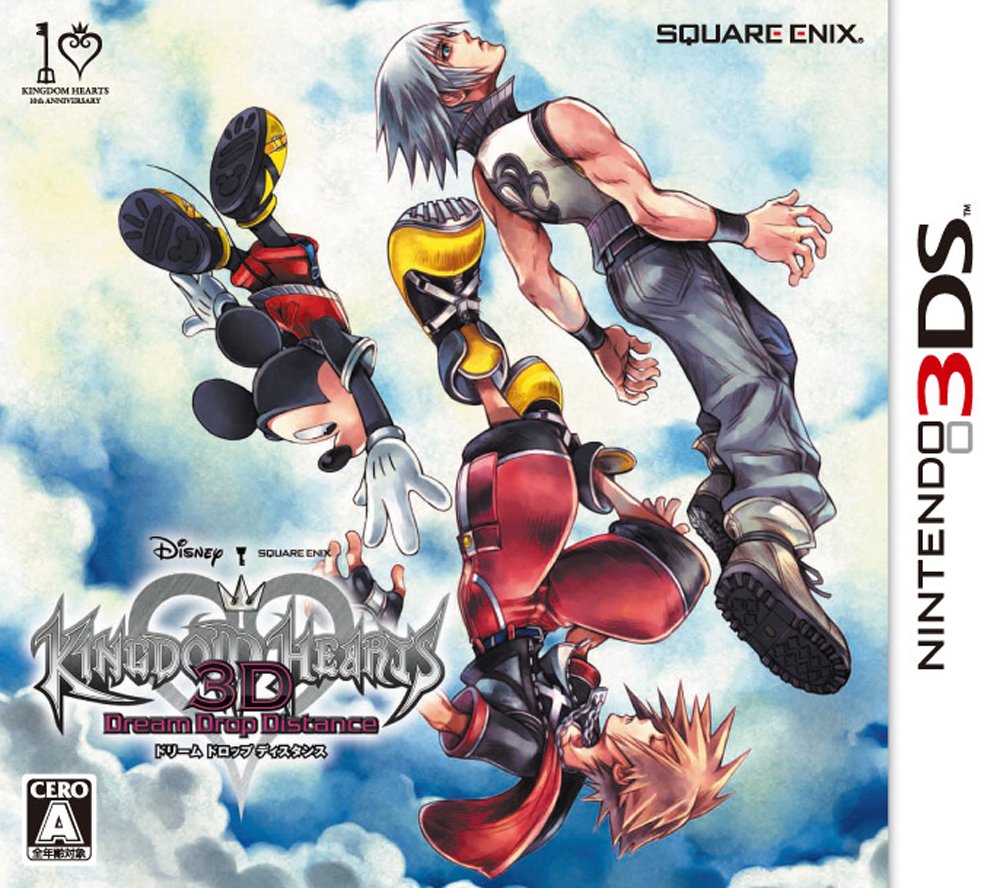

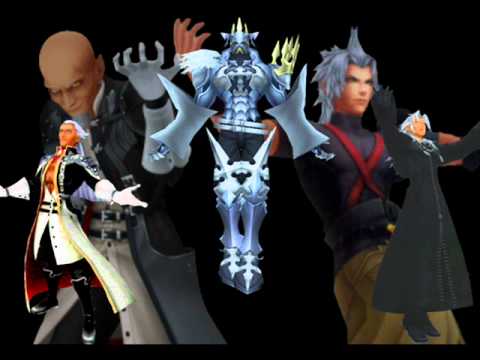
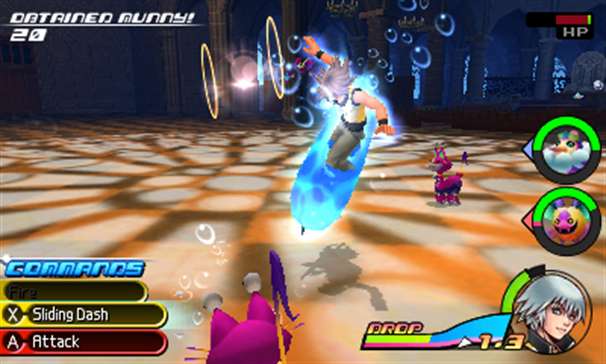


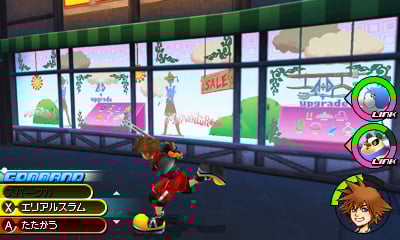


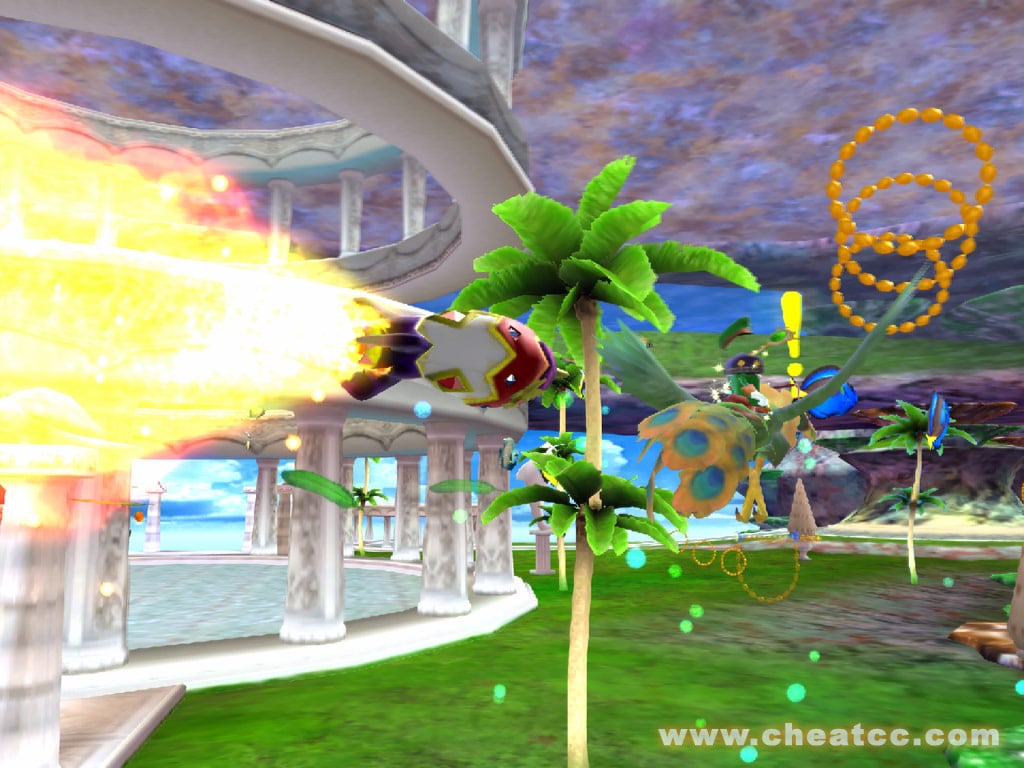
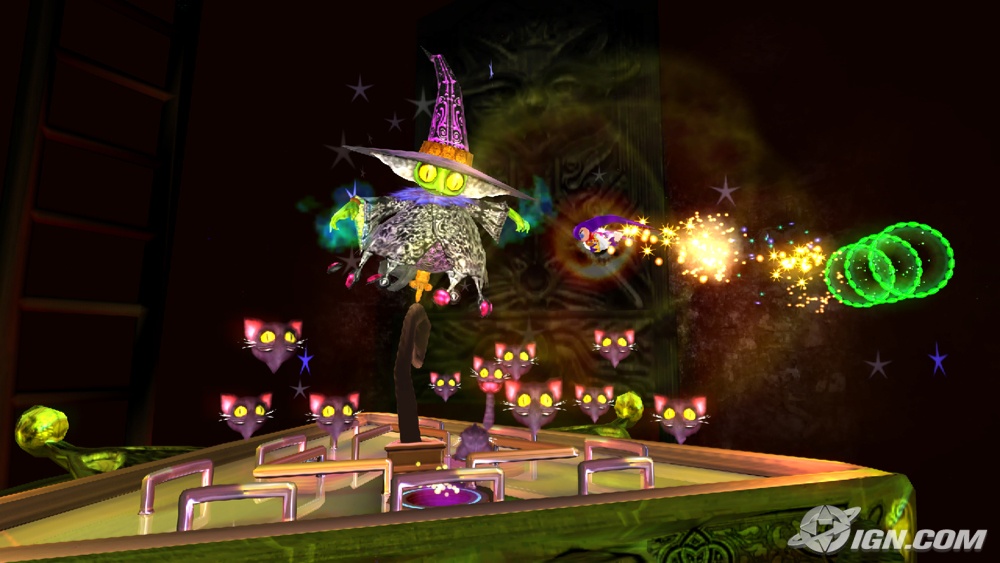
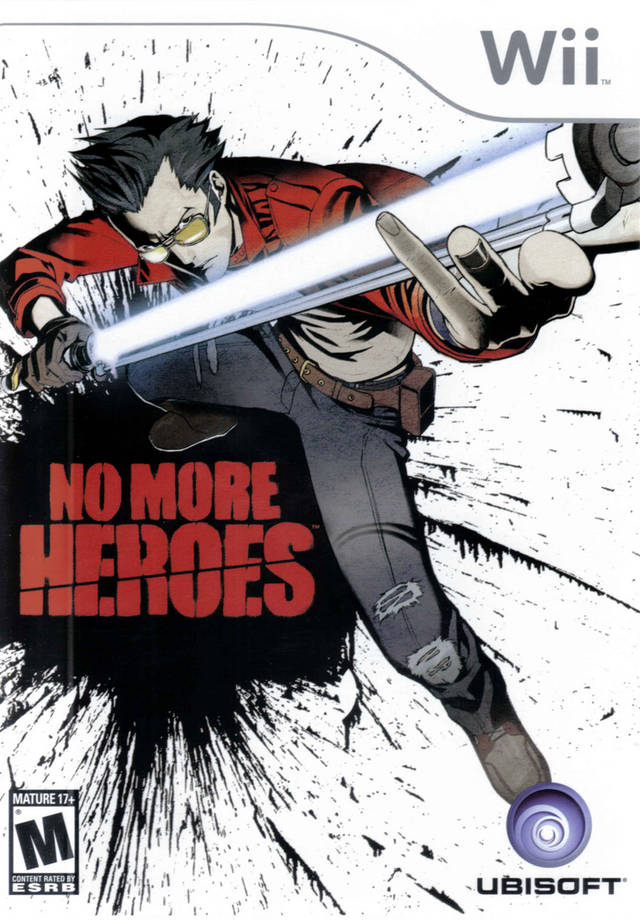


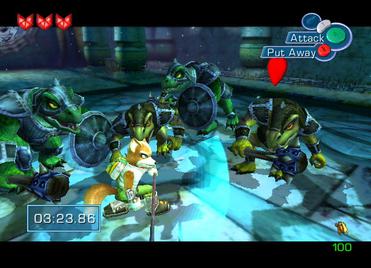
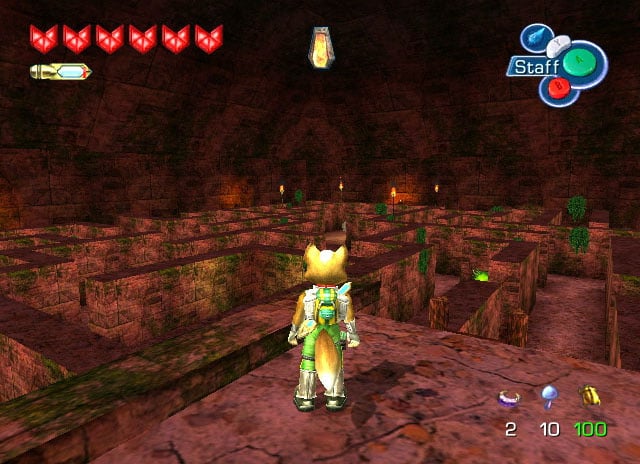


-7.png)